As a dance photographer, I spend a lot of time scouting locations. While it’s always tempting to gravitate toward grand architecture, manicured parks, or pristine city squares, some of my absolute favourite images have been shot in places most people would completely overlook - or avoid altogether.
I’m talking about the grotty alleyways, the gritty industrial sites, the brutalist concrete structures, and the beautifully decaying red brick walls. To the untrained eye, they might just look like urban eyesores. But through the lens, they are absolute goldmines.
Looking back through my archives from the last few years, I realised just how many of my favourite ambassador and dancer portraits were taken in these exact spots.
When you pair the fluid grace, vibrant costumes, and athletic lines of a dancer with the harsh, textured reality of a decaying urban environment, magic happens. The contrast is instant, dramatic, and incredibly powerful. It strips away the distractions and forces you to focus entirely on the movement and the mood.
Below, I’ve pulled out a few examples from the archives to show you exactly what I mean - and why you should never judge a location by its cover...
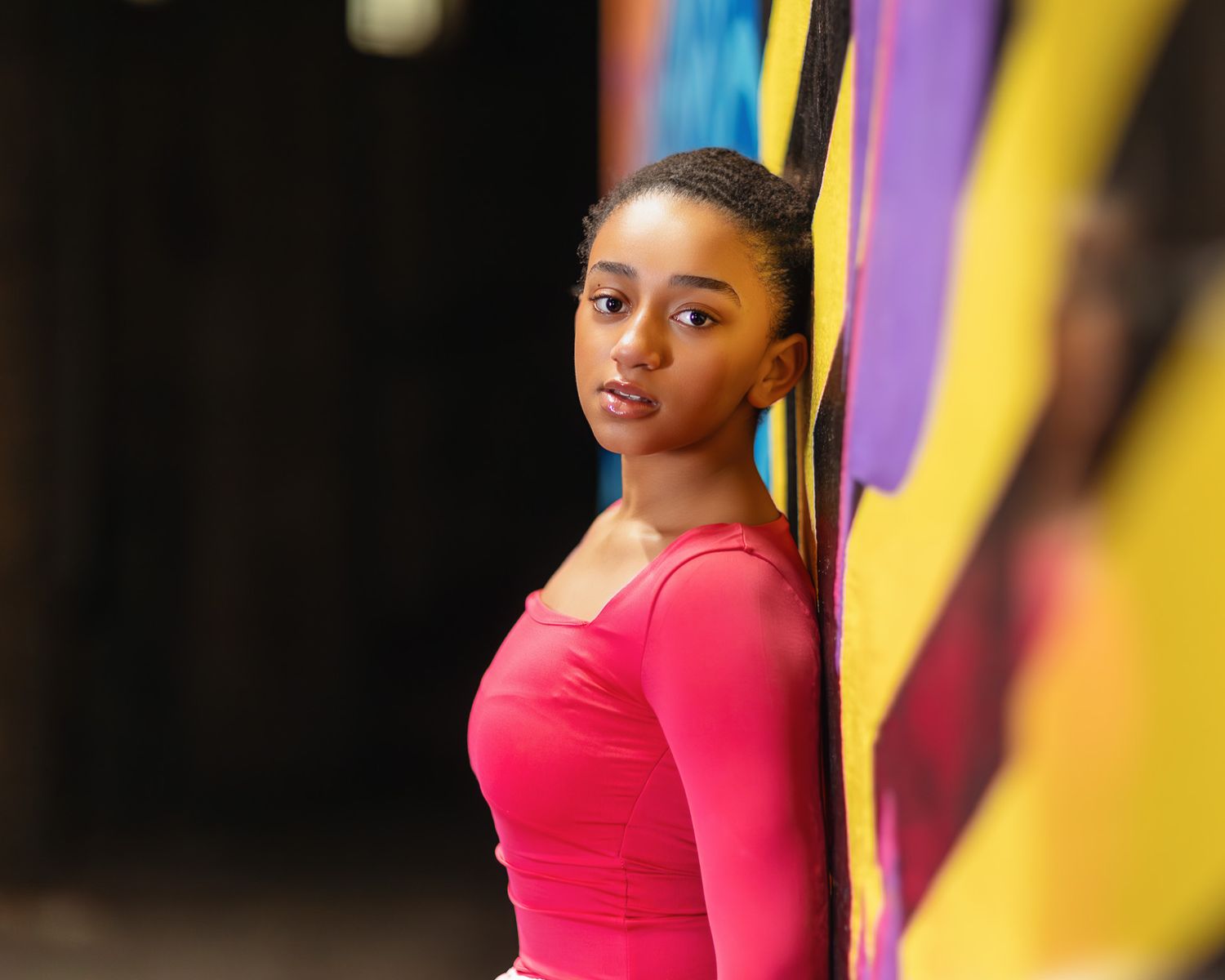
York is famed for its history and beauty. With so many picture-perfect locations across the city, you might wonder why on earth I would actively seek out the not-so-pretty corners.
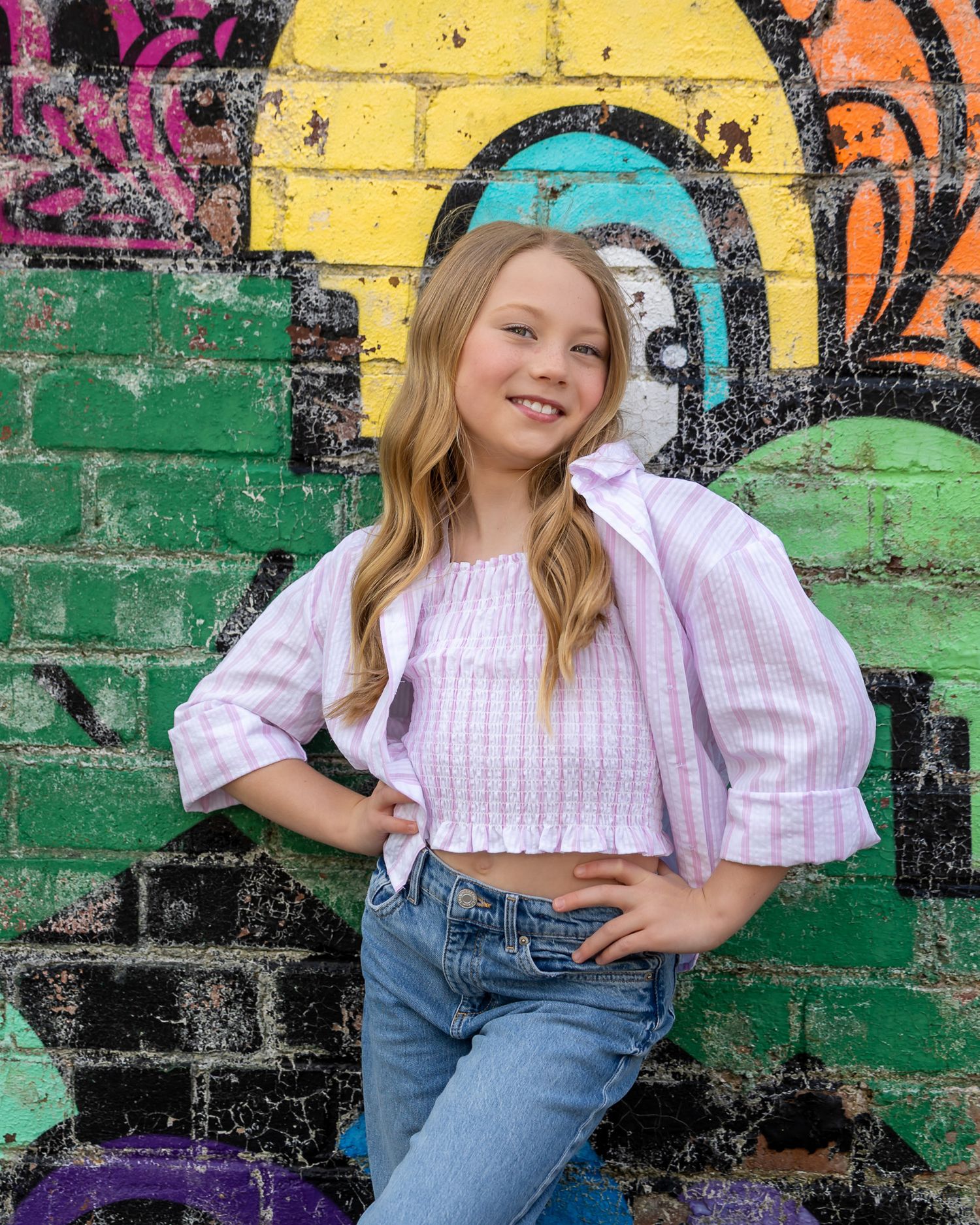
The photo of Ameira above might look like a cool, edgy portrait against a vibrant graffiti wall - and you would be right. But the reality behind the lens is that this specific alleyway off Coney Street is a dark, dingy, and decidedly smelly place! It is definitely not somewhere you would want to hang around for too long. Despite the less-than-glamorous environment, it makes for a fantastic portrait backdrop. The textures and colors were so good that I made sure to get some shots of Tara in the exact same spot (below).

Fences, Gates, and Physical Connections
Fences and gates are always great to use in a dance photograph. Instead of just having the dancer stand in front of a background, these structures allow you to anchor the subject by creating a real physical connection between the dancer and their surroundings. Whether they are leaning against a rusted chain-link fence, gripping an old iron gate, or using the metal bars to frame a pose, it instantly grounds the image and adds an extra layer of depth to the composition.
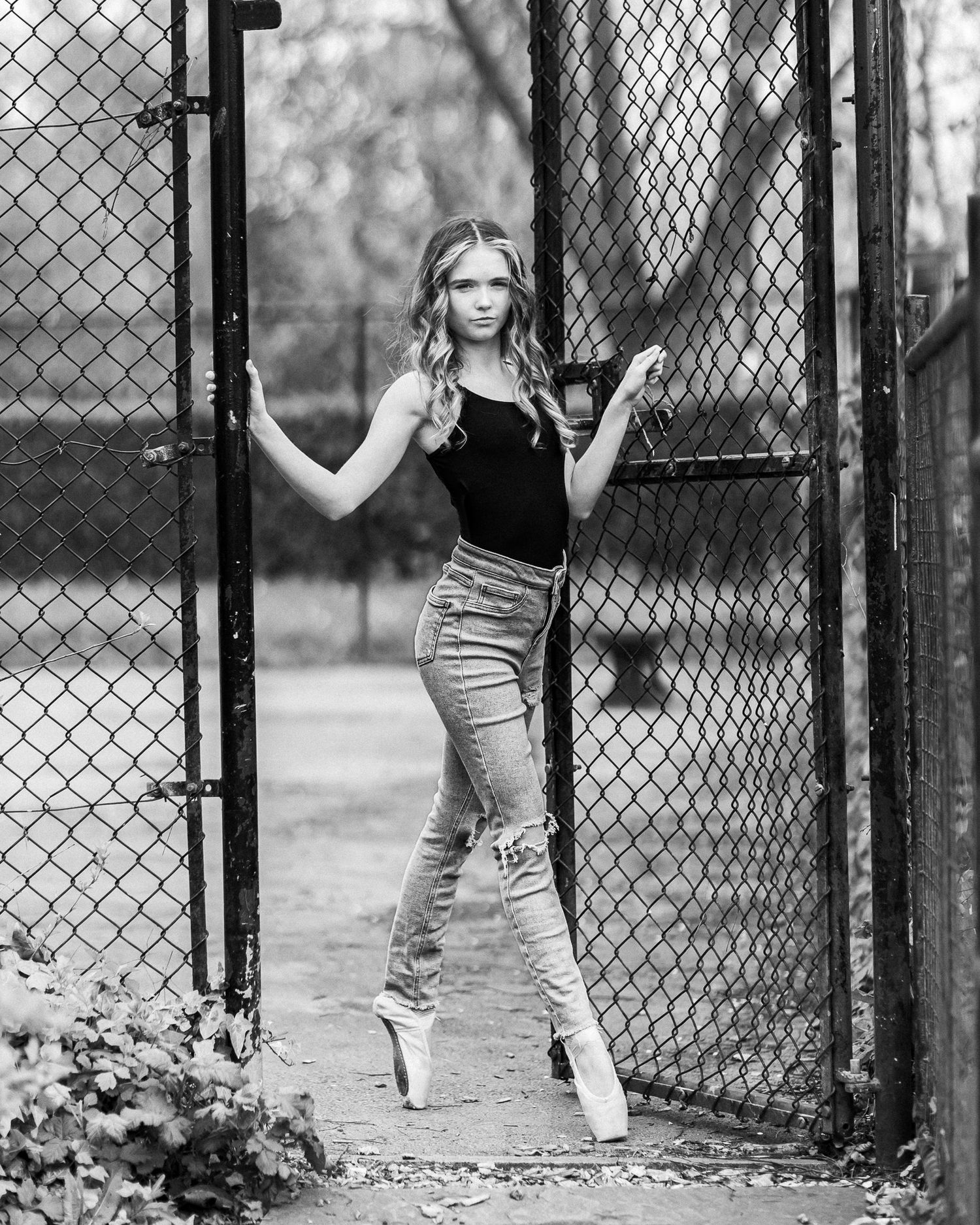
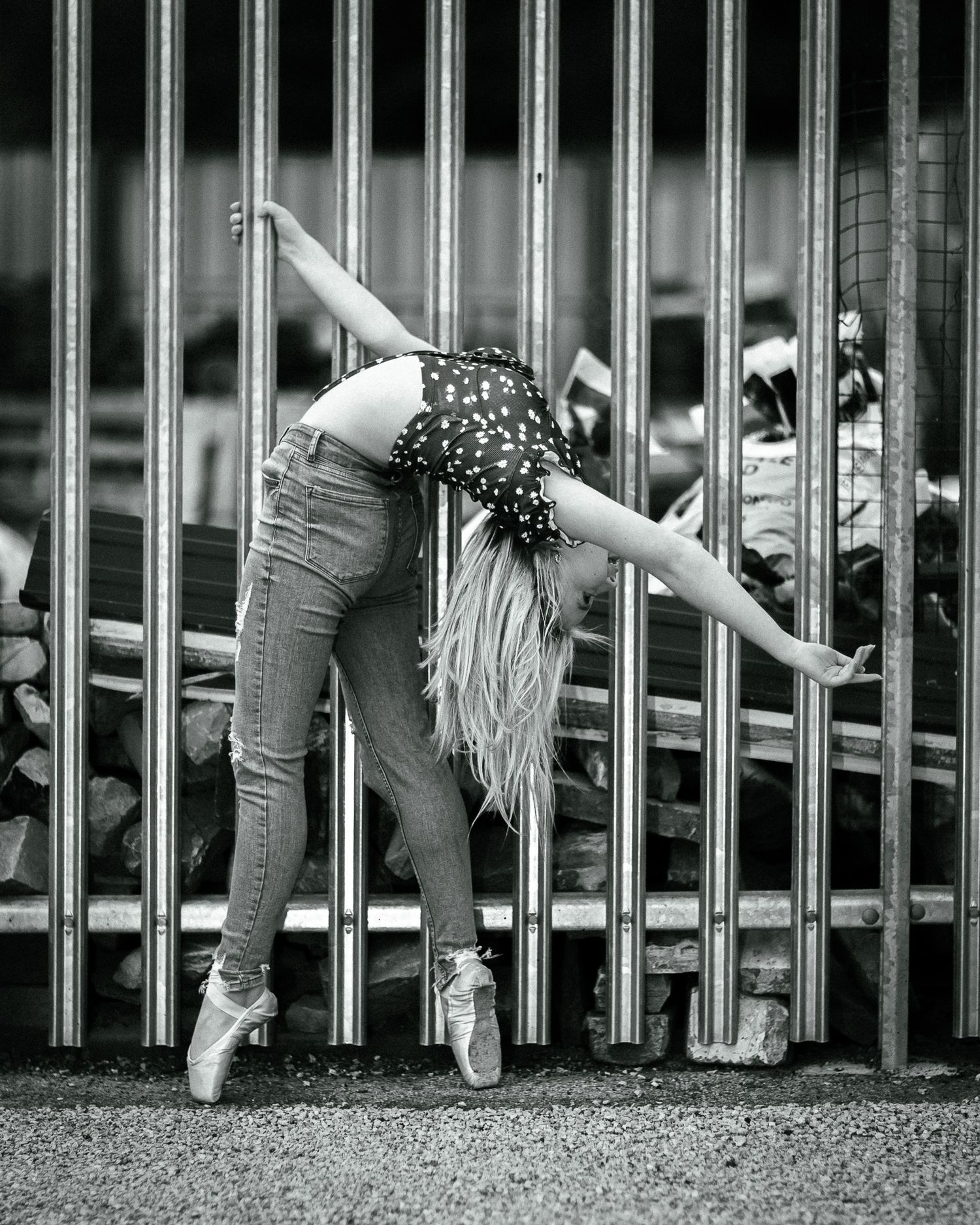
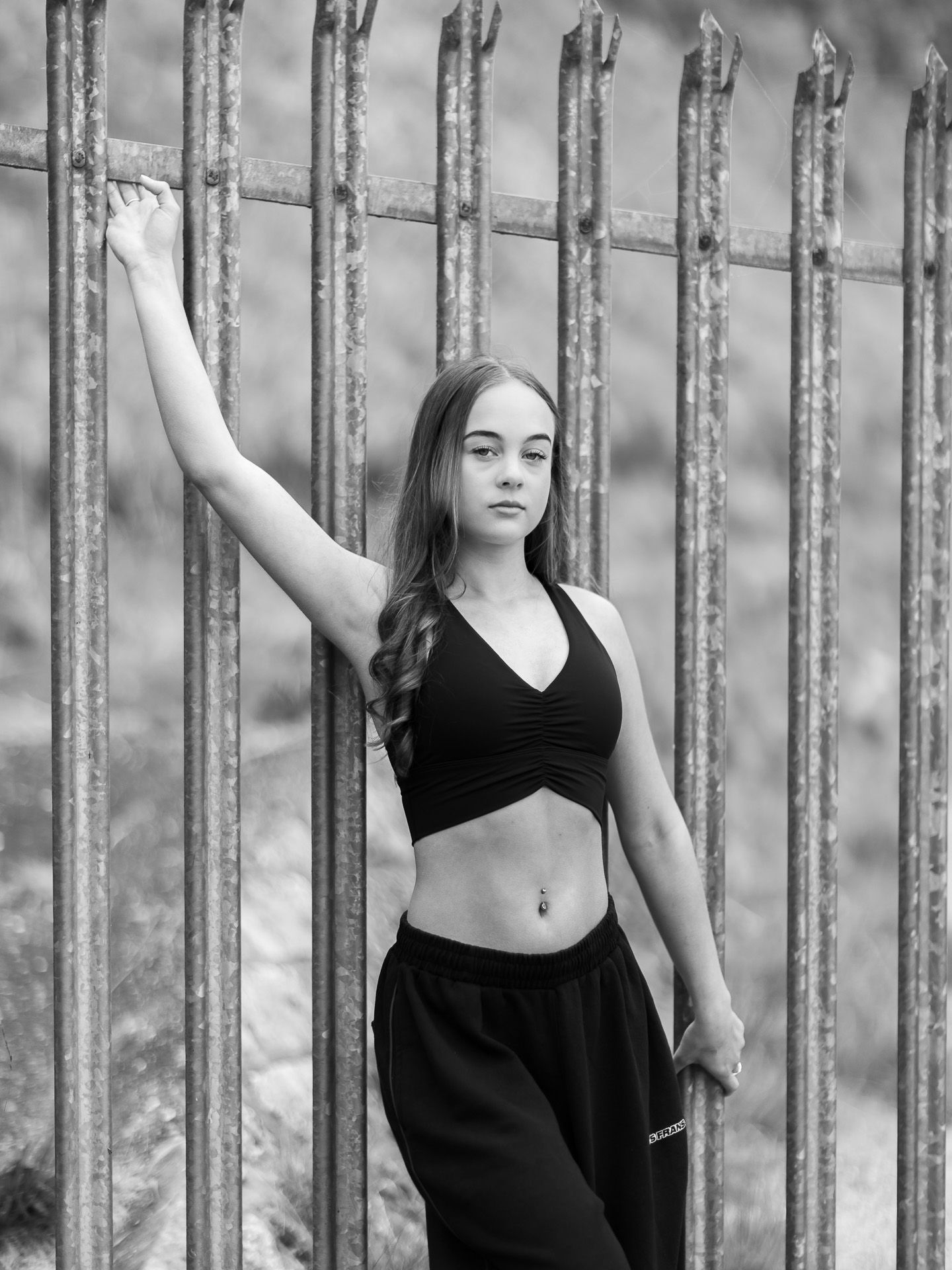
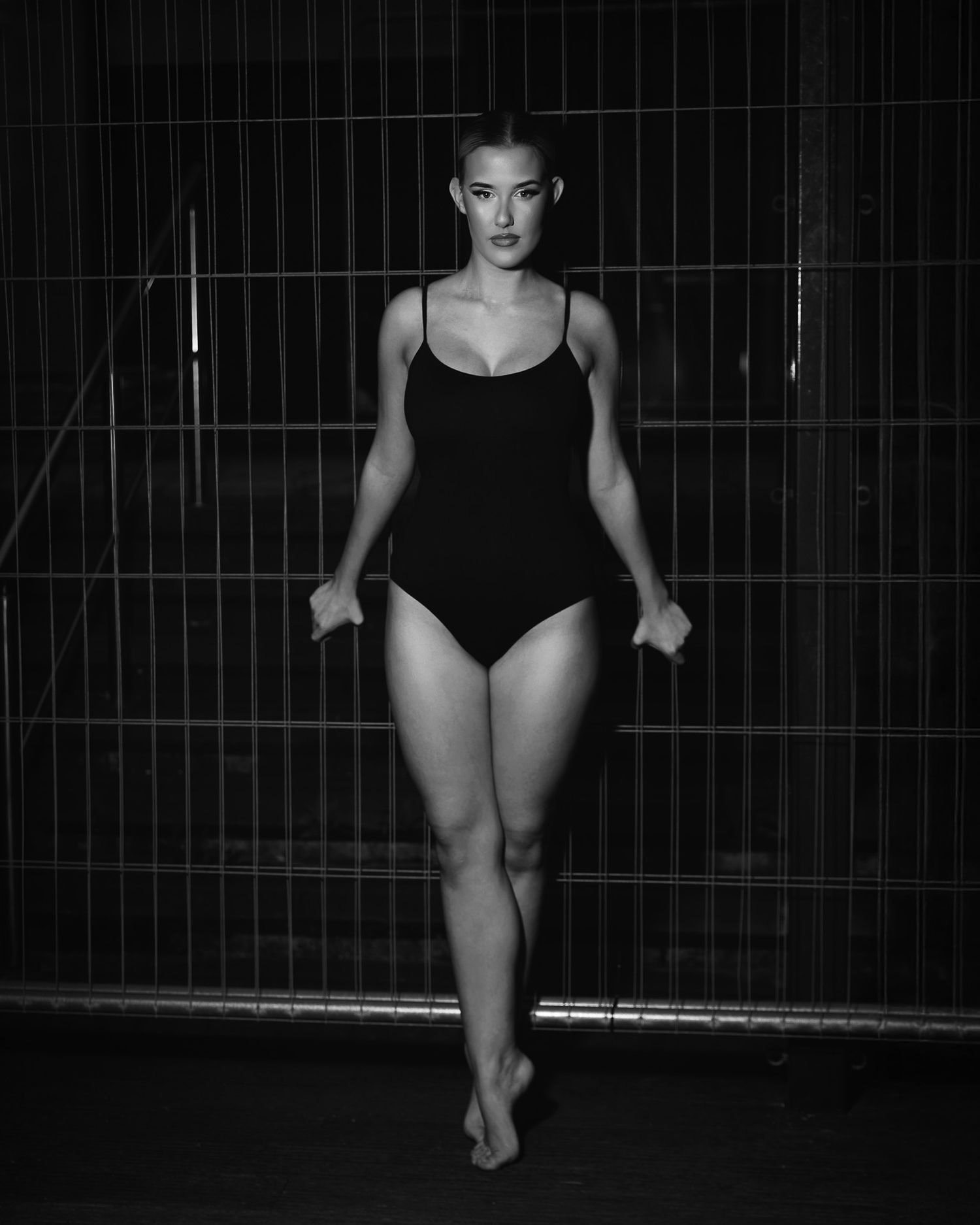
Left to right...
Jess: This photo was also created in York, in a park just a short distance from the city centre. This chain-link fence surrounded a baseball court, and the weathered gate provided the perfect, gritty frame for a striking Denim en Pointe shot.
Bel: This is from one of my very first Denim en Pointe photoshoots back in 2023. We were actually using a local storage facility yard as our backdrop, and this fence stood out to us as the ideal anchor for this dramatic back-bending pose.
Maisie: This was my first time working with Maisie, who has since joined my ambassador team. It was shot right at the bottom of the cliffs in Scarborough, where the rusted industrial fence worked perfectly to frame a moody, powerful portrait.
Scarlet: We were working around Leeds Dock, which is usually a beautiful, modern location that you wouldn't dream of overlooking. However, there was a lot of maintenance work going on during our shoot, and we used this temporary metal construction fence to our advantage to create a wonderfully atmospheric photo.
The Vibrant Contrast of Graffiti
Graffiti is art, pure and simple. While some might still view it as mere urban vandalism, the right piece of street art can serve as an absolutely fantastic, dynamic backdrop for a dance photograph.
What I love most about shooting against graffiti is the sheer energy it injects into the frame. Dancers are artists who express themselves through movement, and street artists do the exact same thing through paint. Bringing those two art forms together in a single image creates a massive explosion of creativity.
The clashing colors, the bold graphic lines, and the raw urban texture provide a high-contrast environment that makes a dancer's silhouette completely pop. Whether they are wearing a simple black leotard or a vibrant costume that matches the spray paint, graffiti transforms a dull, forgotten wall into a living, breathing stage.
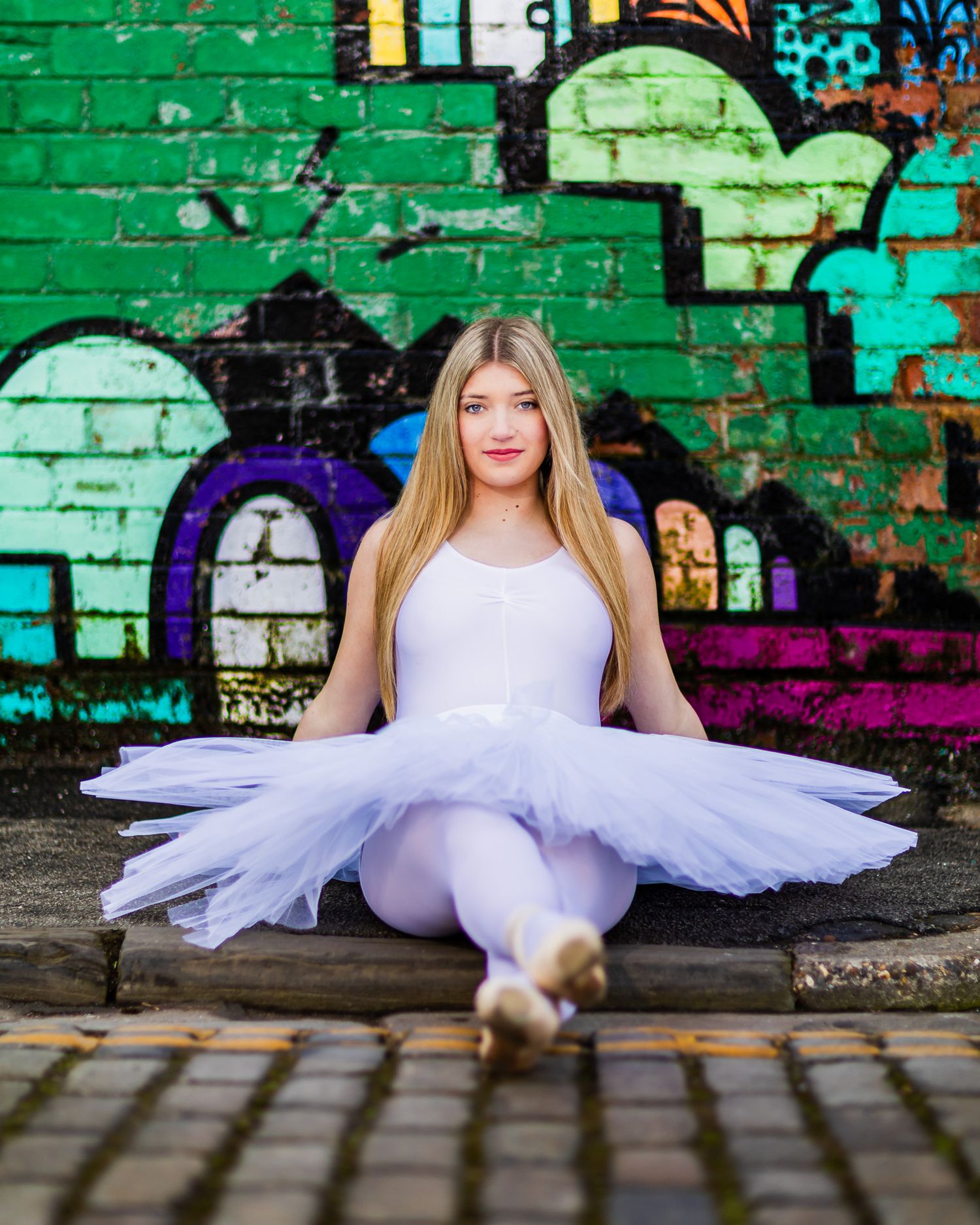
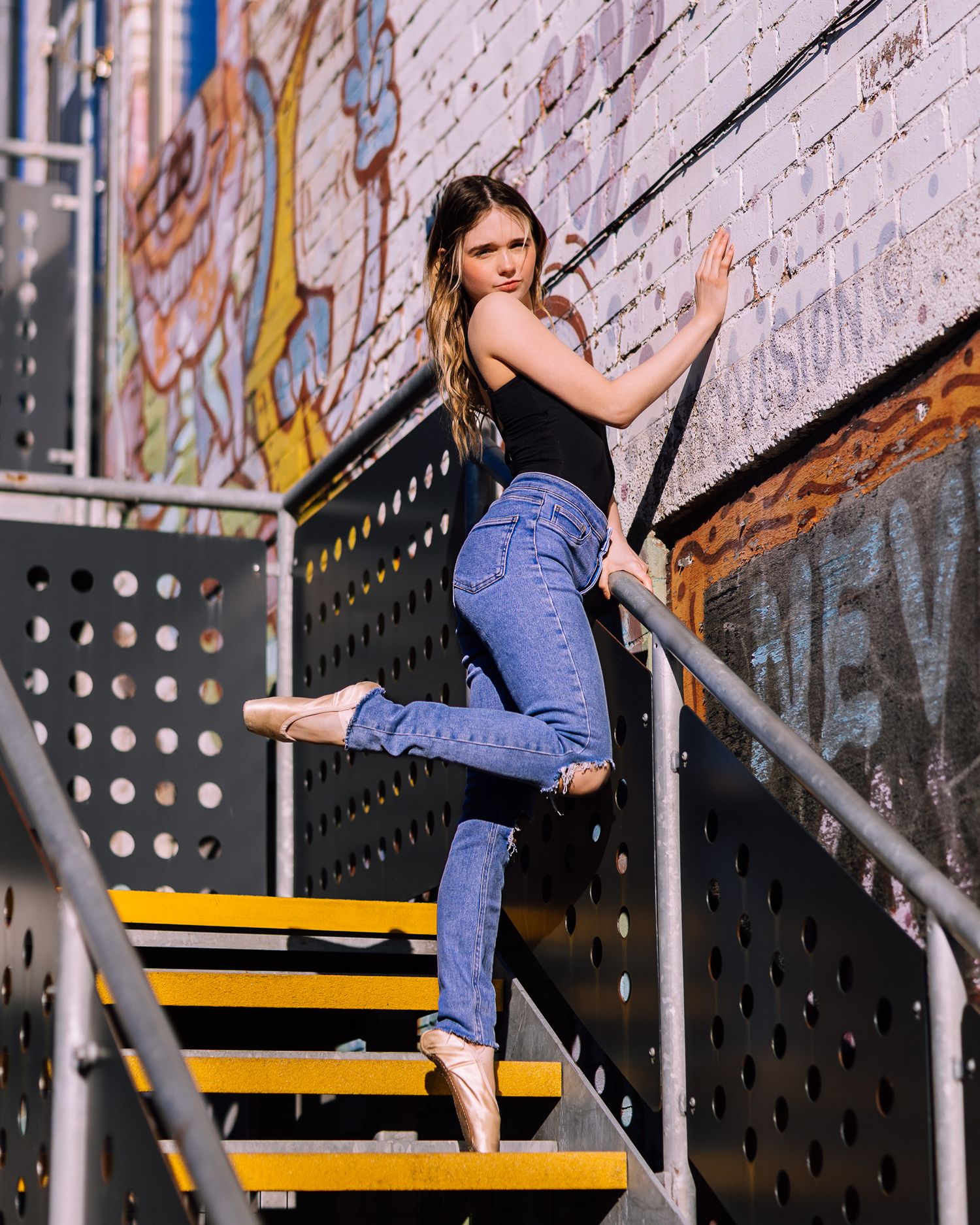
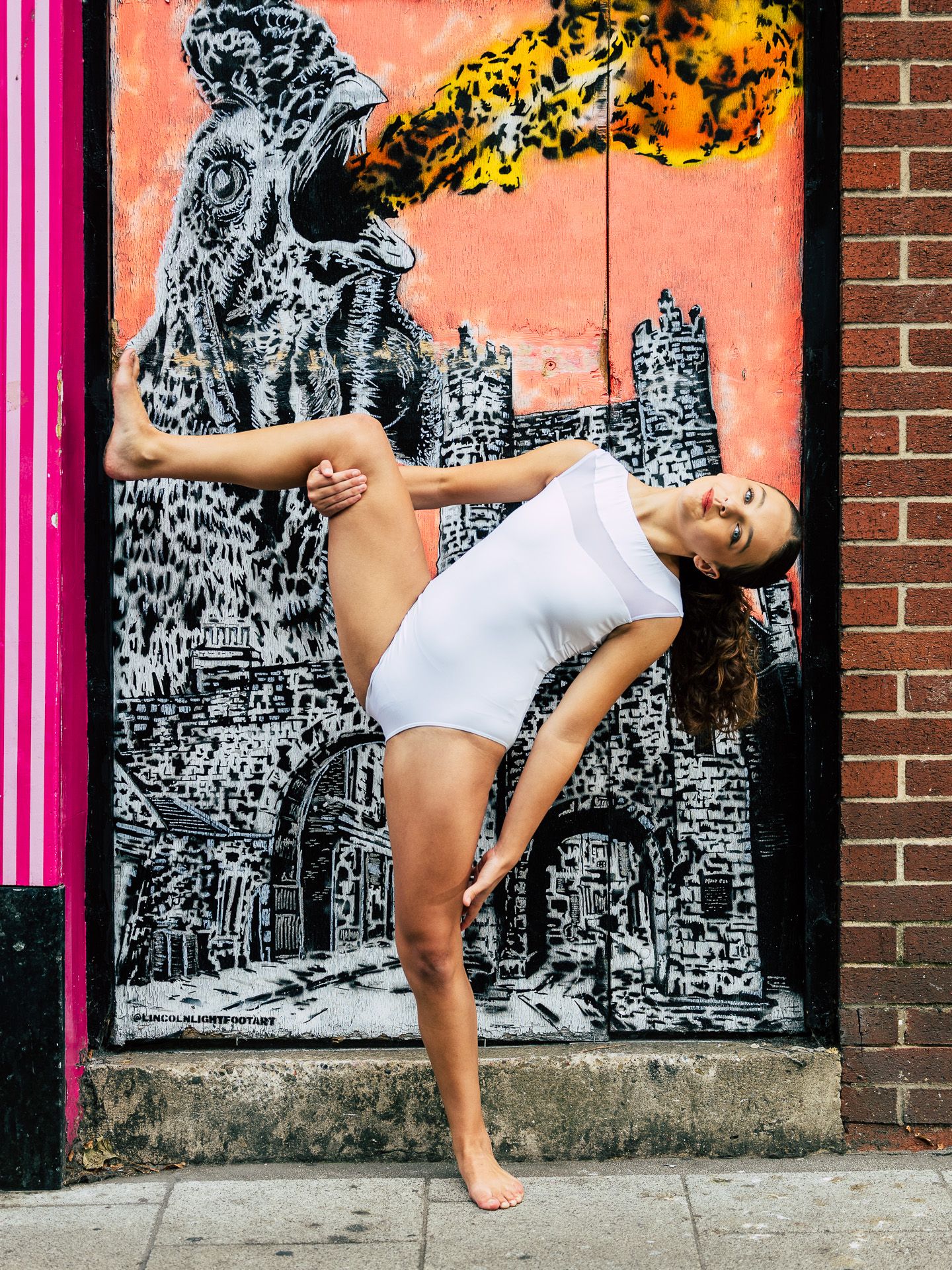
Left to right...
Zoe: Shot in the historic Old Town area of Hull - this remains one of my all-time favourite photos.
Jess: Also located in Hull's Old Town, this industrial fire escape with vibrant graffiti framing the top was the absolute perfect spot for a dynamic pose.
Alba: This piece of street art was on a boarded-up doorway in York. It completely caught my eye as we walked past, proving you always need to keep your eyes peeled.
Darcey: Hull again (!) - this time for a portrait that worked incredibly well by contrasting Darcey’s casual, clean look against the gritty, textured wall.
The Timeless Grit of Red Brick Walls
There is something incredibly atmospheric about a weathered, decaying red brick wall. Unlike modern, polished architecture, old brickwork carries a sense of history and character that you just can't replicate. The rough, uneven textures, the peeling mortar, and the beautiful gradient of deep reds, oranges, and earthy browns provide a naturally rich canvas for dance photography.
When you place a dancer against a centuries-old brick wall, it instantly brings a raw, industrial grit to the image. The linear patterns of the brickwork create fantastic leading lines that draw the eye straight to the subject, while the rugged surface contrasts beautifully with the fluid grace of a dancer's movement. Whether it’s an abandoned warehouse or the side of an old factory, these walls prove that sometimes the most ordinary structures make the most extraordinary backdrops.
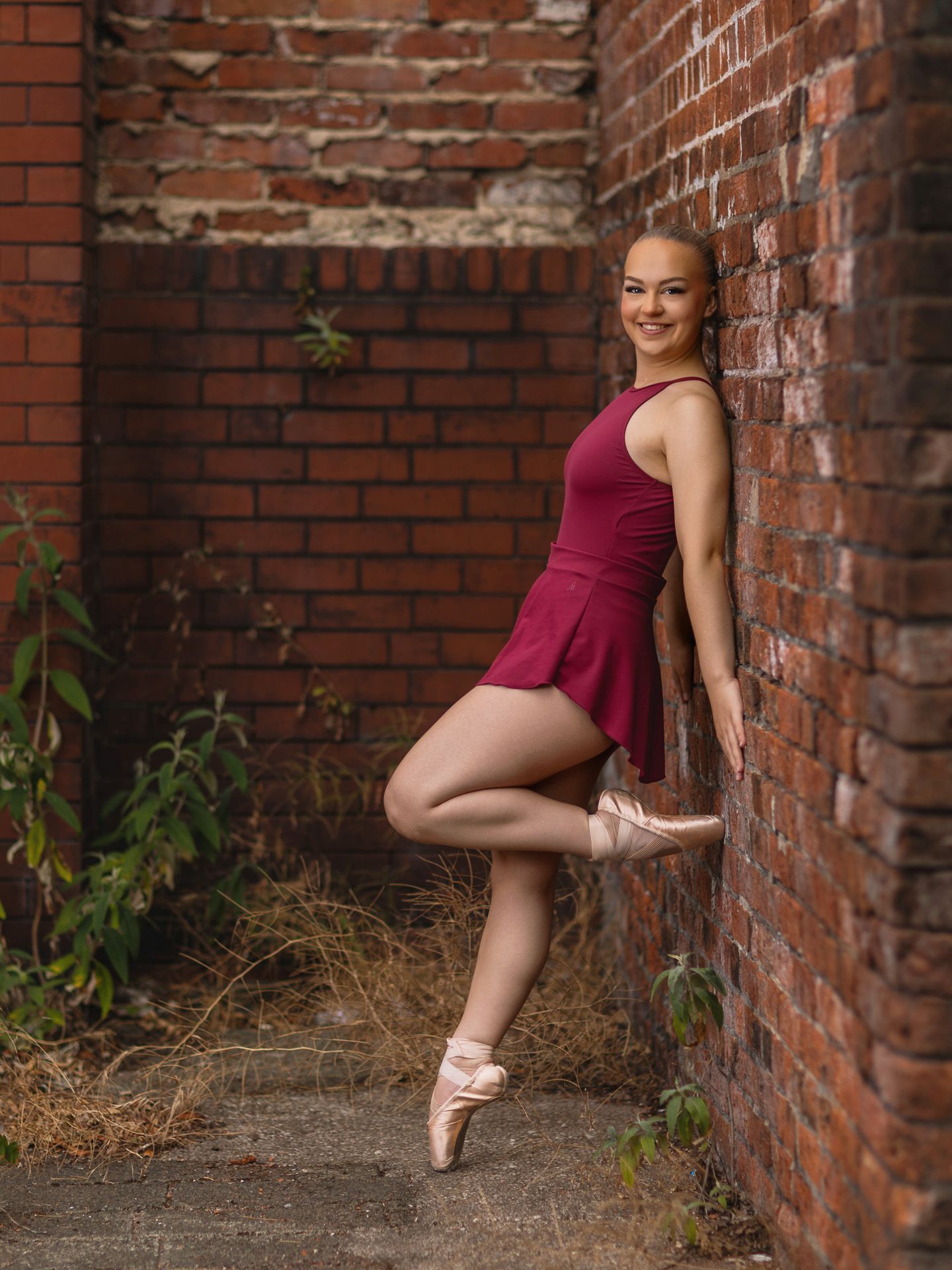
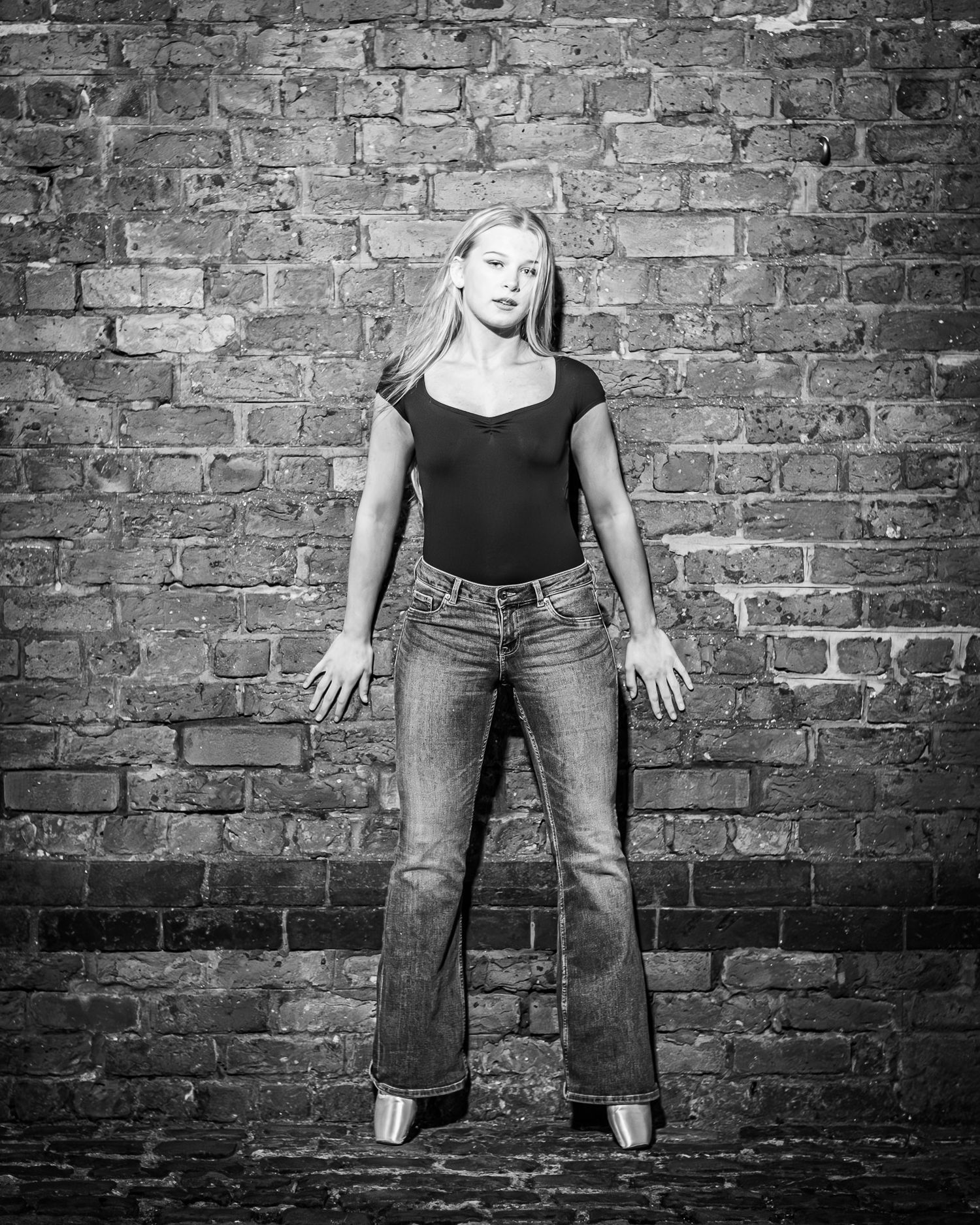
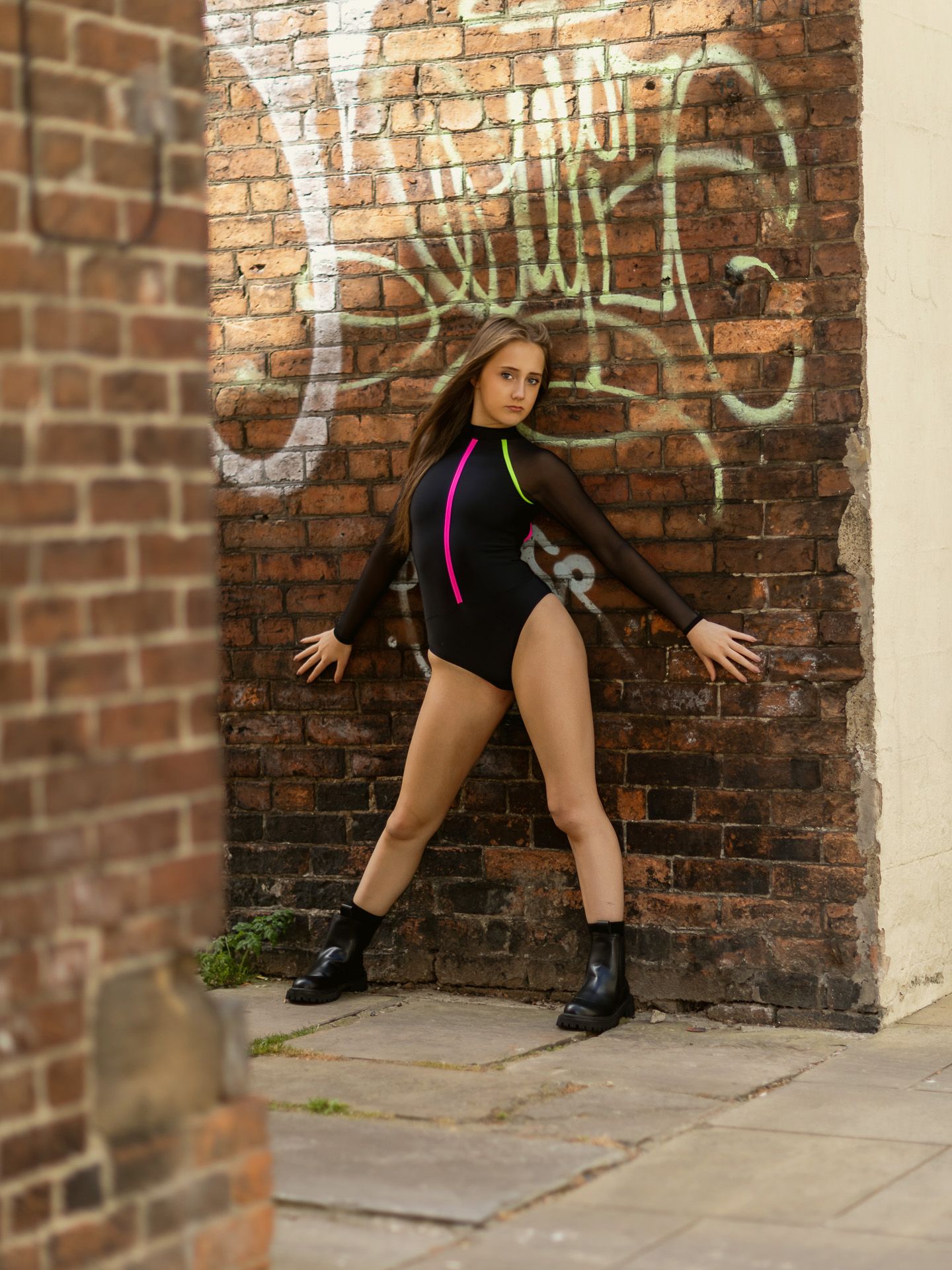

Left to right...
Nadia: This is a favourite little spot of mine in Wakefield, tucked right between the modern newness of Burgage Square and the historic character of the Civic Quarter.
Isabel: This comes from my first—and so far, only—photoshoot in Liverpool, where we explored the areas around the historic Albert Docks. This was actually a night shoot, and all the dramatic light hitting Isabel in this photo is coming directly from a nearby street lamp.
Tara: A very recent photo from a shoot in Wakefield. This brilliant red brick wall is fantastic because it ticks both boxes—bringing that rich brick texture while also featuring a bit of grit from some street art.
Evie: This is an older photo from the archives, and it actually features the exact same wall that Nadia is leaning on in the first photo! By switching to a different angle and using a completely different editing style, it took on a totally new look.
The Hidden Drama of Urban Alleyways
Alleyways are the ultimate hidden gems of urban dance photography. Most people see them as mere shortcuts or places to put the bins, but to a photographer, they are brilliant natural studios. Because alleyways are narrow and enclosed by tall buildings, they create an incredible sense of depth and compression that naturally frames a dancer.
They also offer some of the most dramatic lighting you can find. Depending on the time of day, a dingy alley can channel a single, powerful shaft of sunlight, or create deep, moody shadows that add instant tension and atmosphere to a portrait. Whether it's a slippery cobblestone path, an old metal fire escape, or an assortment of random pipes running up a wall, the claustrophobic, gritty vibe of an alleyway provides a stunning contrast to the expansive, uninhibited freedom of a dancer in mid-leap.
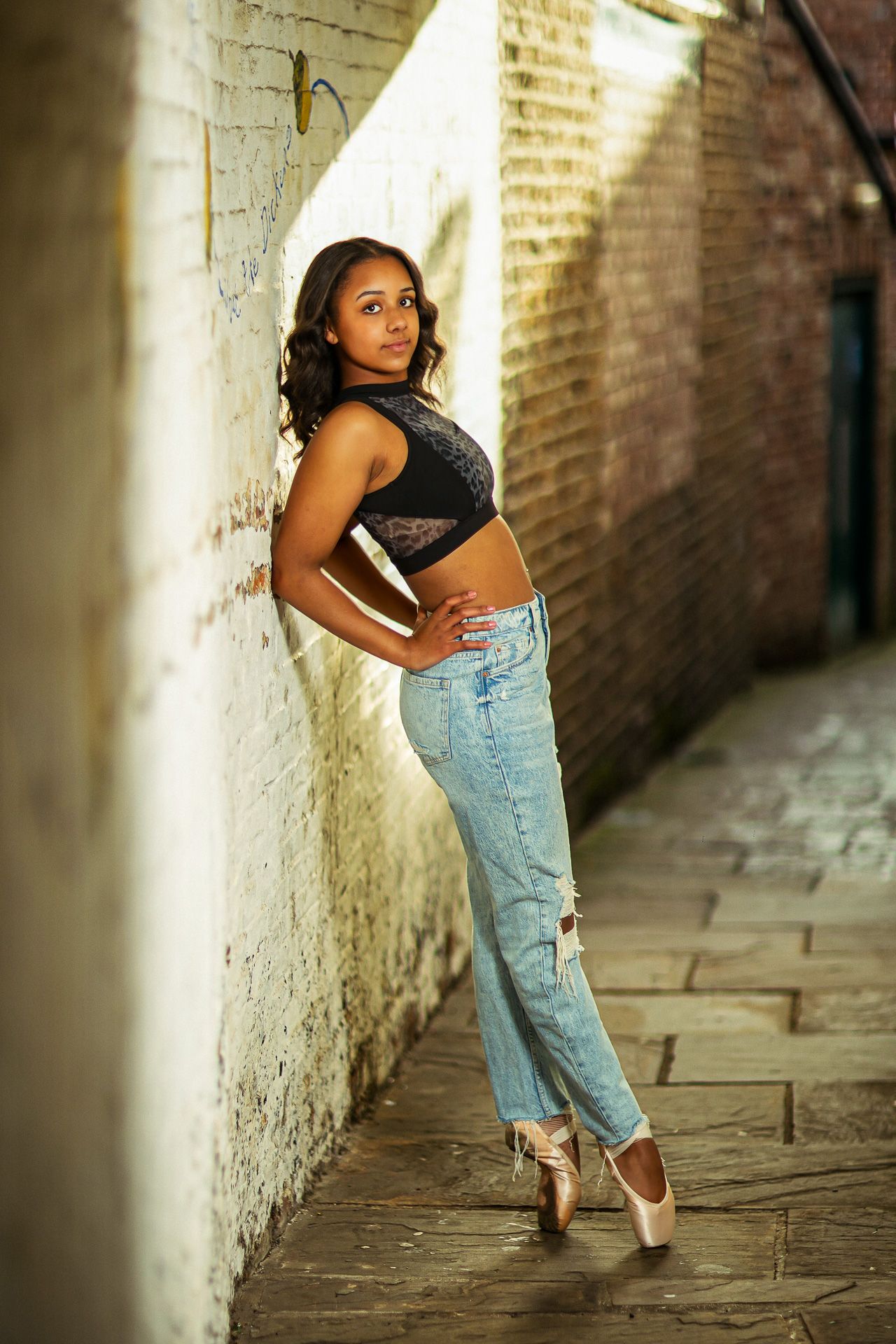
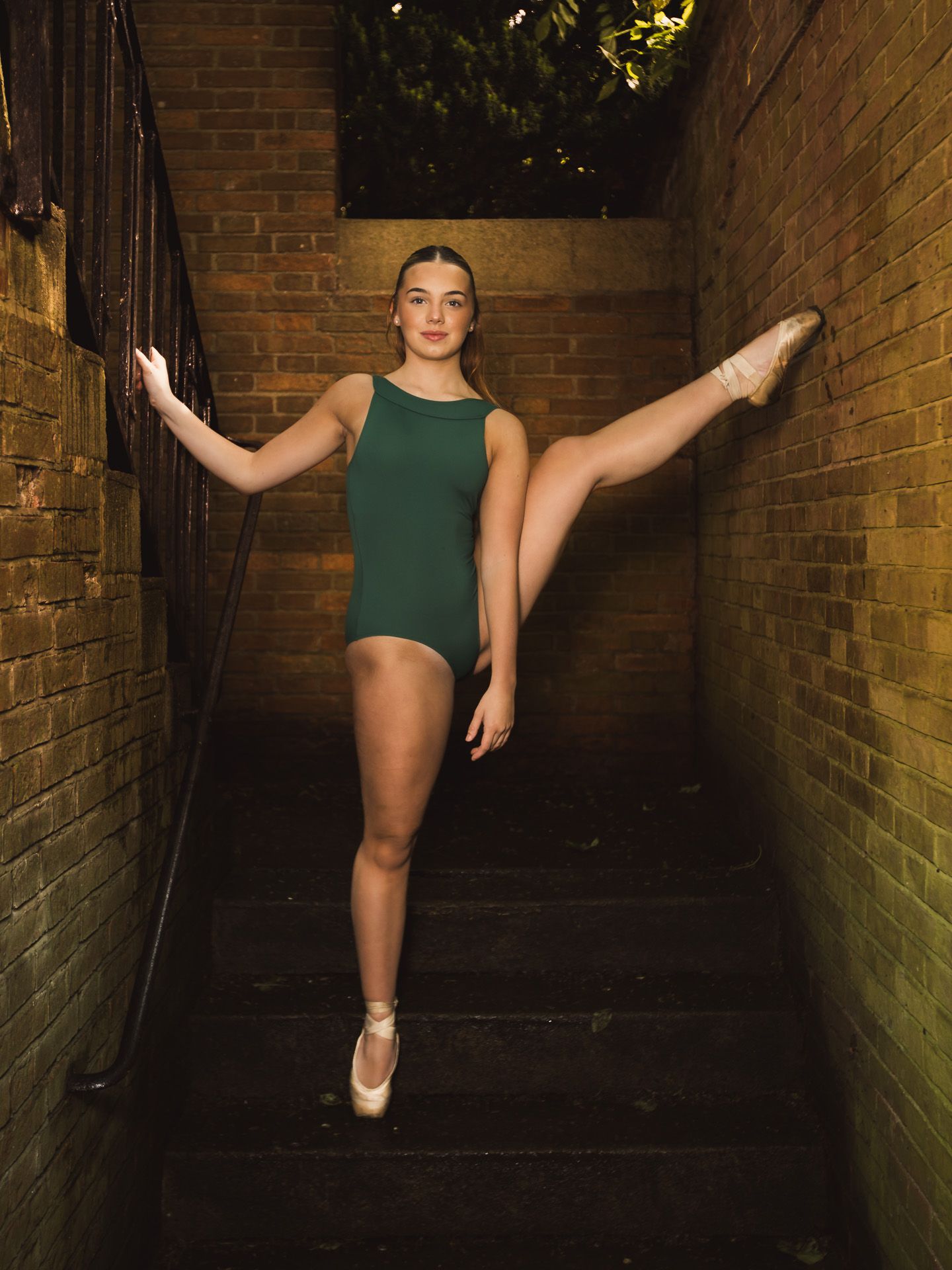
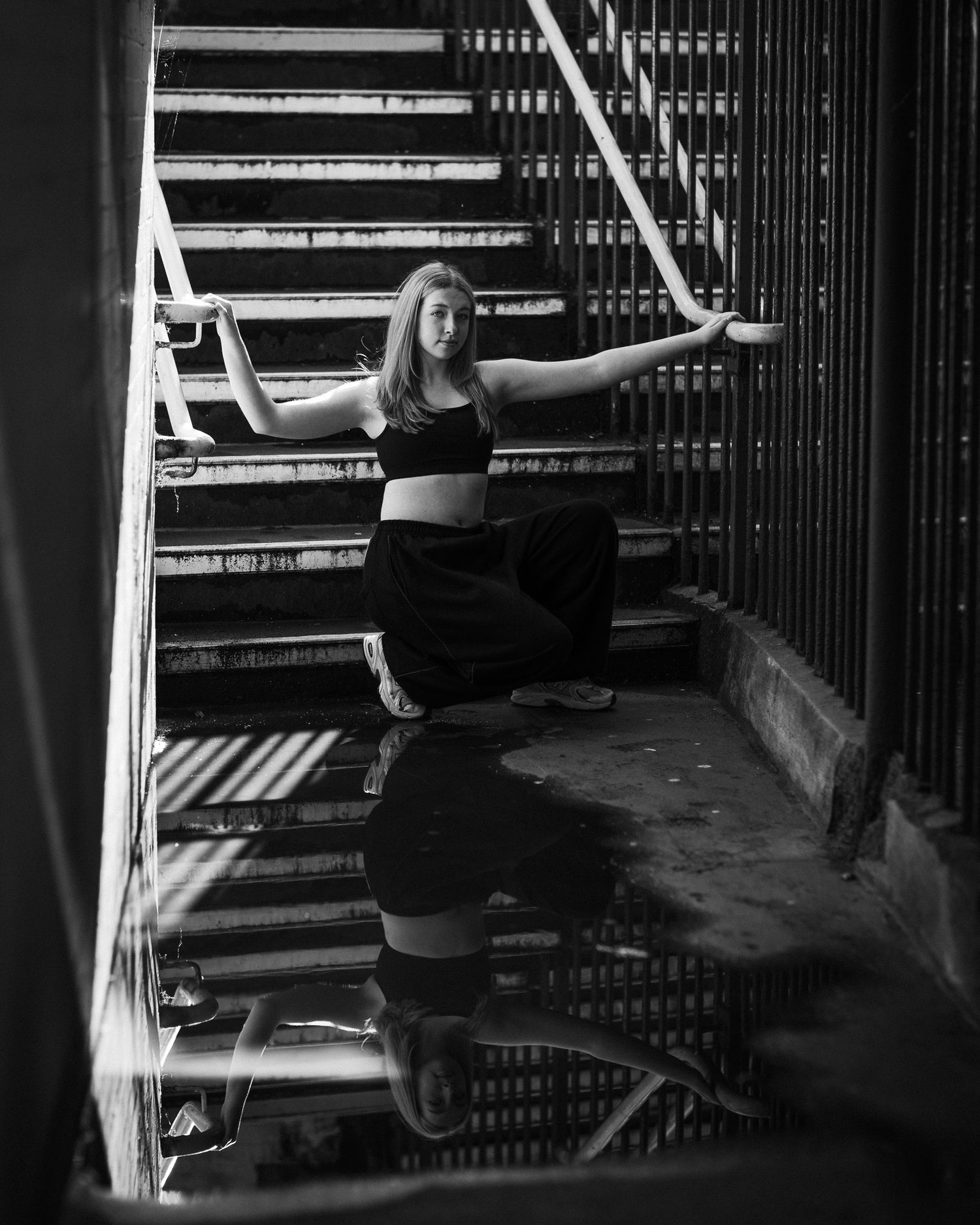
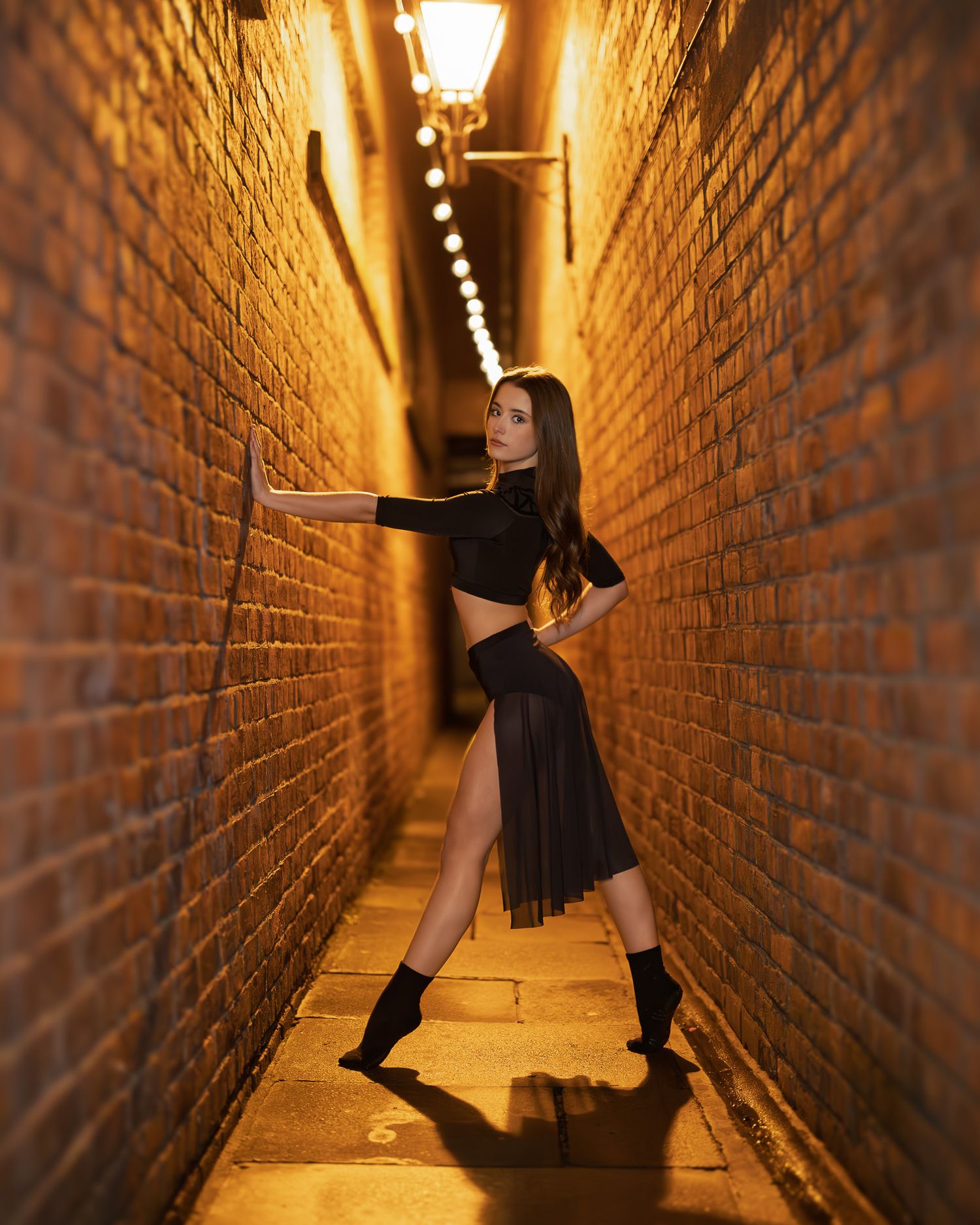
Left to right...
Steph: Shot during a cold January Denim en Pointe photoshoot in Malton. This particular alleyway captured the most gorgeous morning light coming through.
Casey: A hidden alleyway and industrial staircase in Harrogate framed this fantastic red-brick scene.
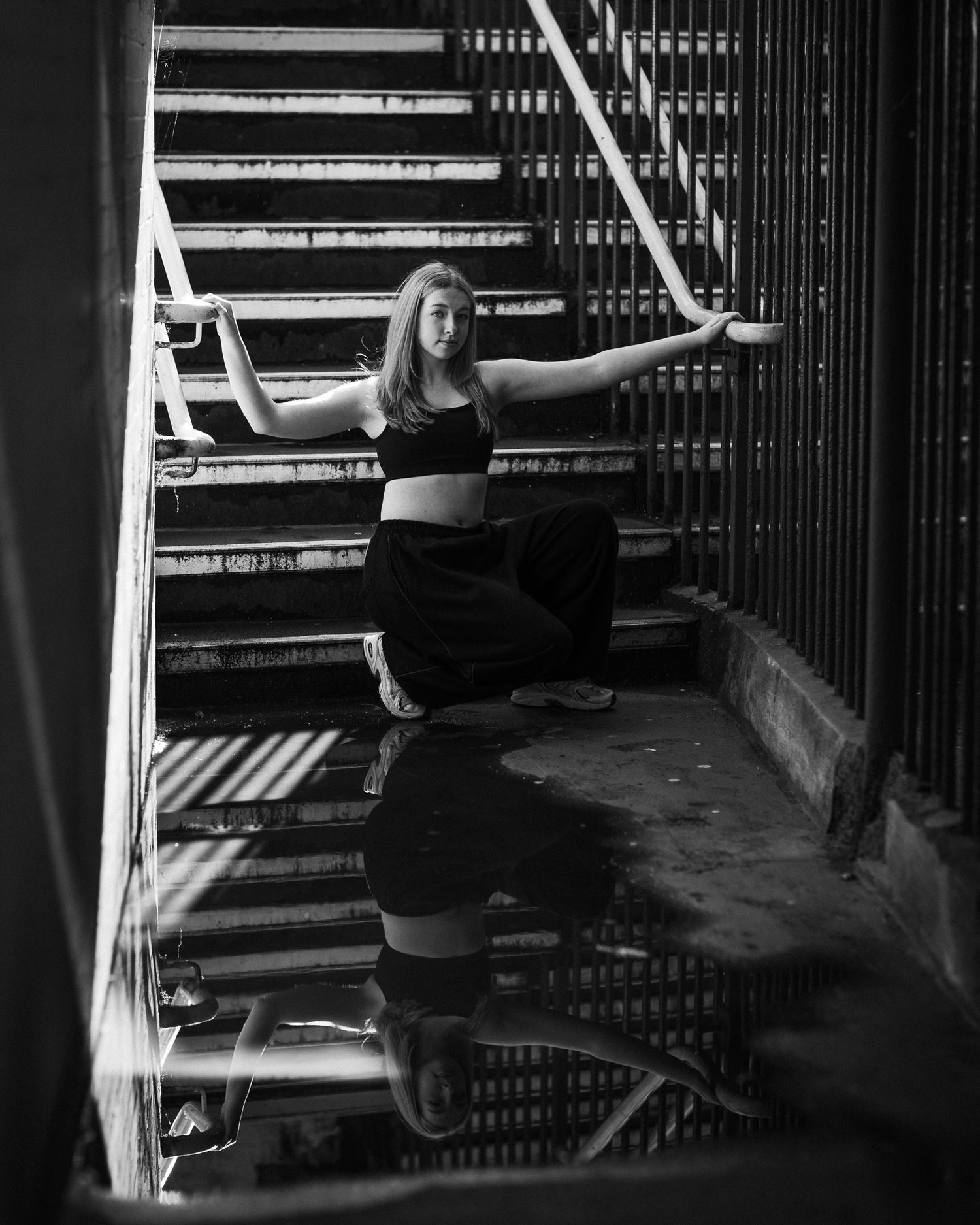
Rosie: This one is more of a gritty underpass beneath the railway tracks at Knaresborough station, but it definitely counts! It was a bit smelly with puddles and broken glass everywhere—I think her mum genuinely thought I was crazy for choosing it until she saw the finished results!
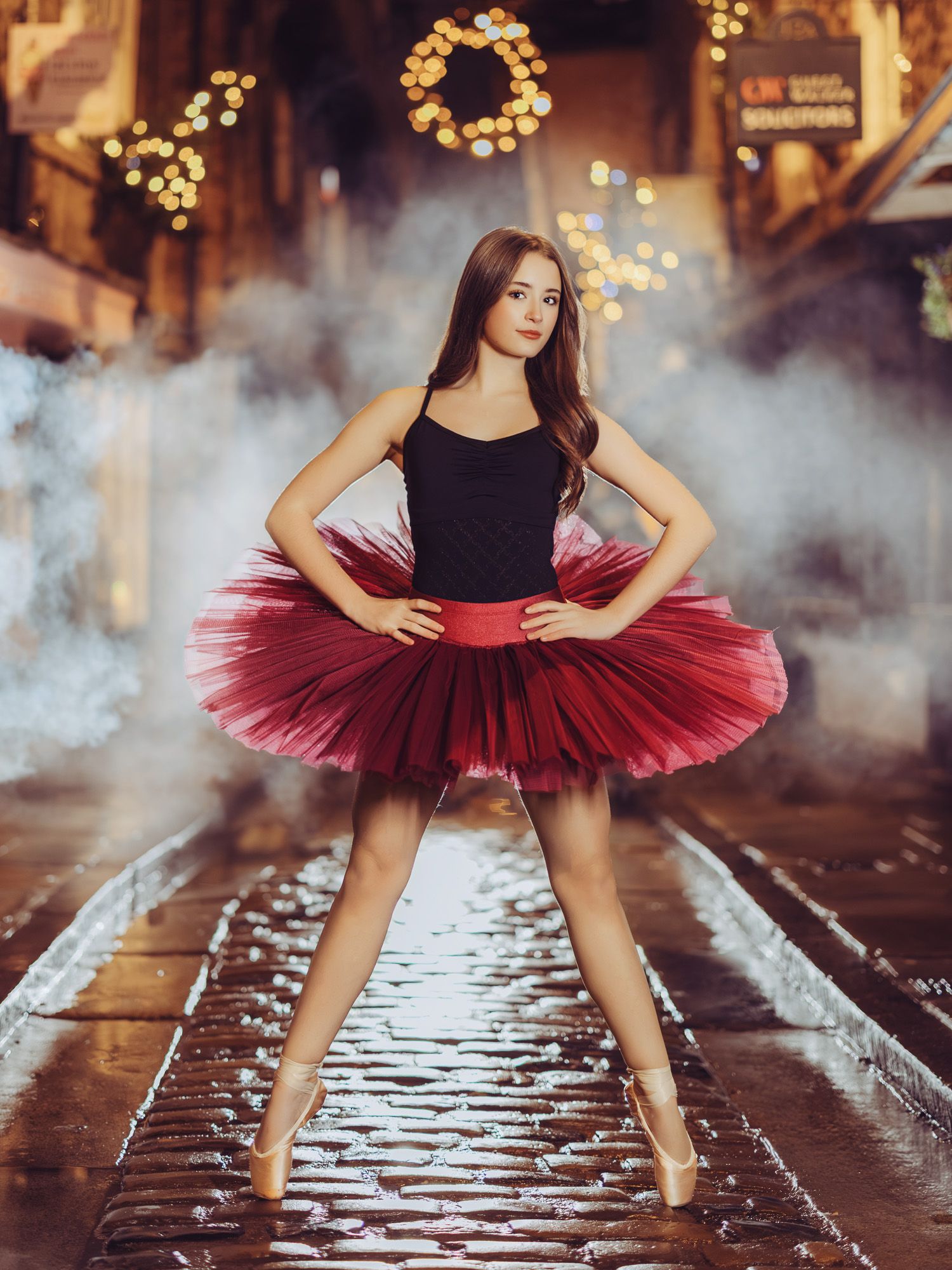
Jasmine: This was from a night shoot in York. Even though this was a very narrow, dark alleyway, there was a string of festoon Christmas lights hanging high above us, adding a beautiful ambient glow to the background.
The Power of Texture
If there is one common thread that ties all of these "ugly" locations together, it’s texture. In a pristine studio or a clean, modern space, the backgrounds are often smooth and uniform. But when you step out into the forgotten corners of a city, you are surrounded by a tactile goldmine. I’m talking about flaking paint, rusted iron, rough concrete, crumbling mortar, and corrugated metal.
Through the lens, these rough surfaces do something magical: they give the photograph a tangible sense of touch. When you contrast those rugged, abrasive surfaces with the smooth skin, soft fabrics, or clean lines of a dancer, the subject instantly pops out of the frame. Texture adds visual weight, grit, and a beautifully raw edge that transforms a simple pose into a compelling story.
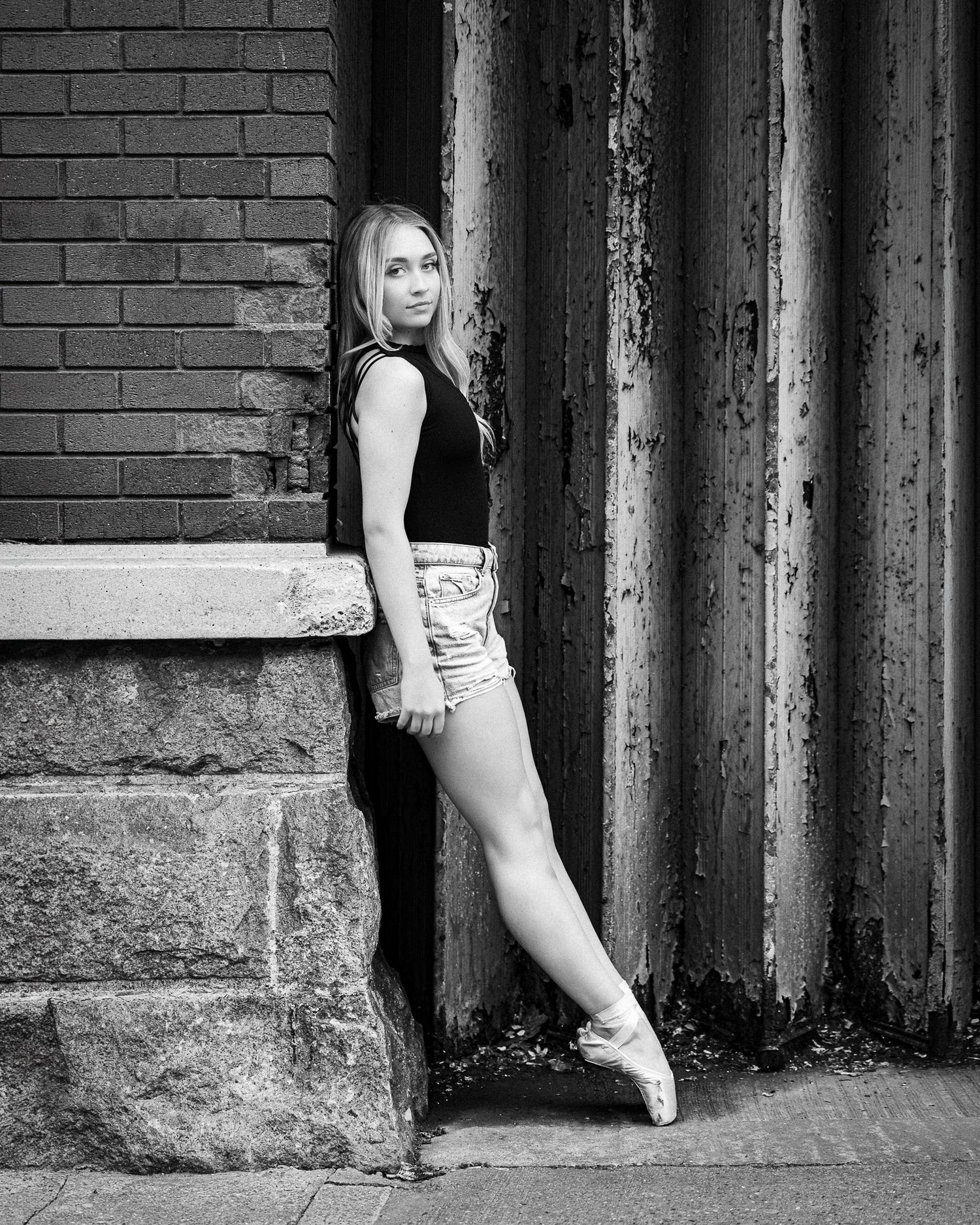
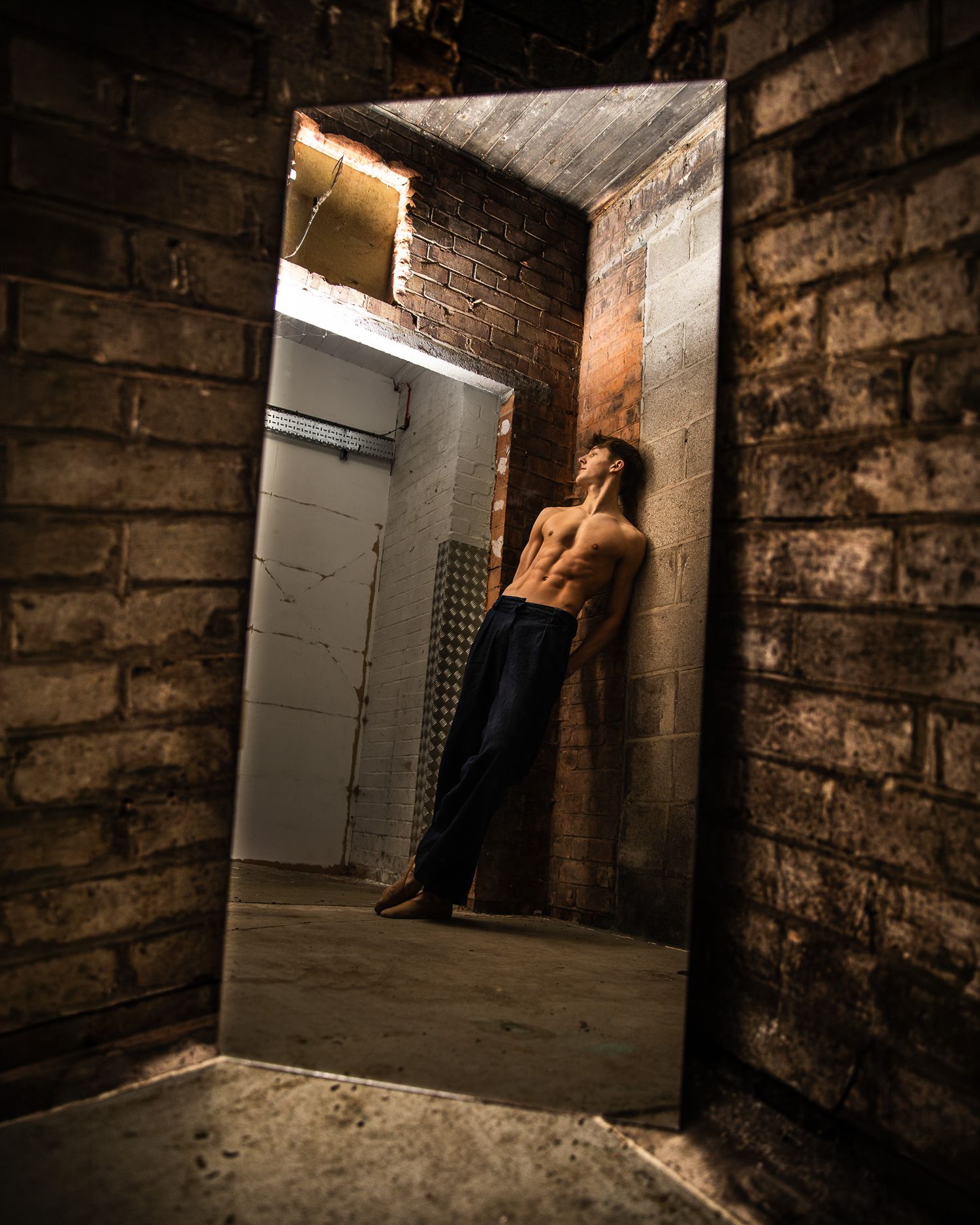
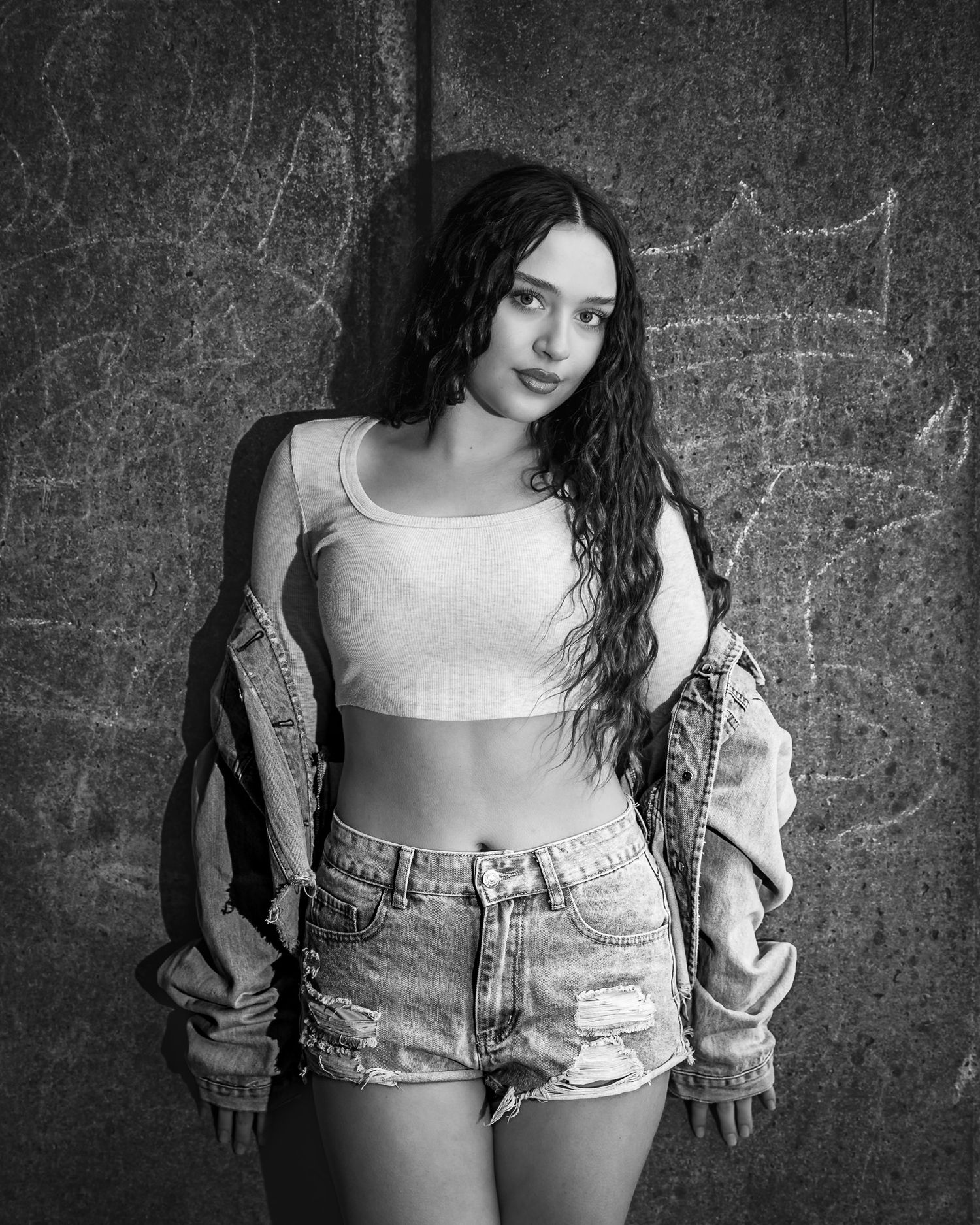
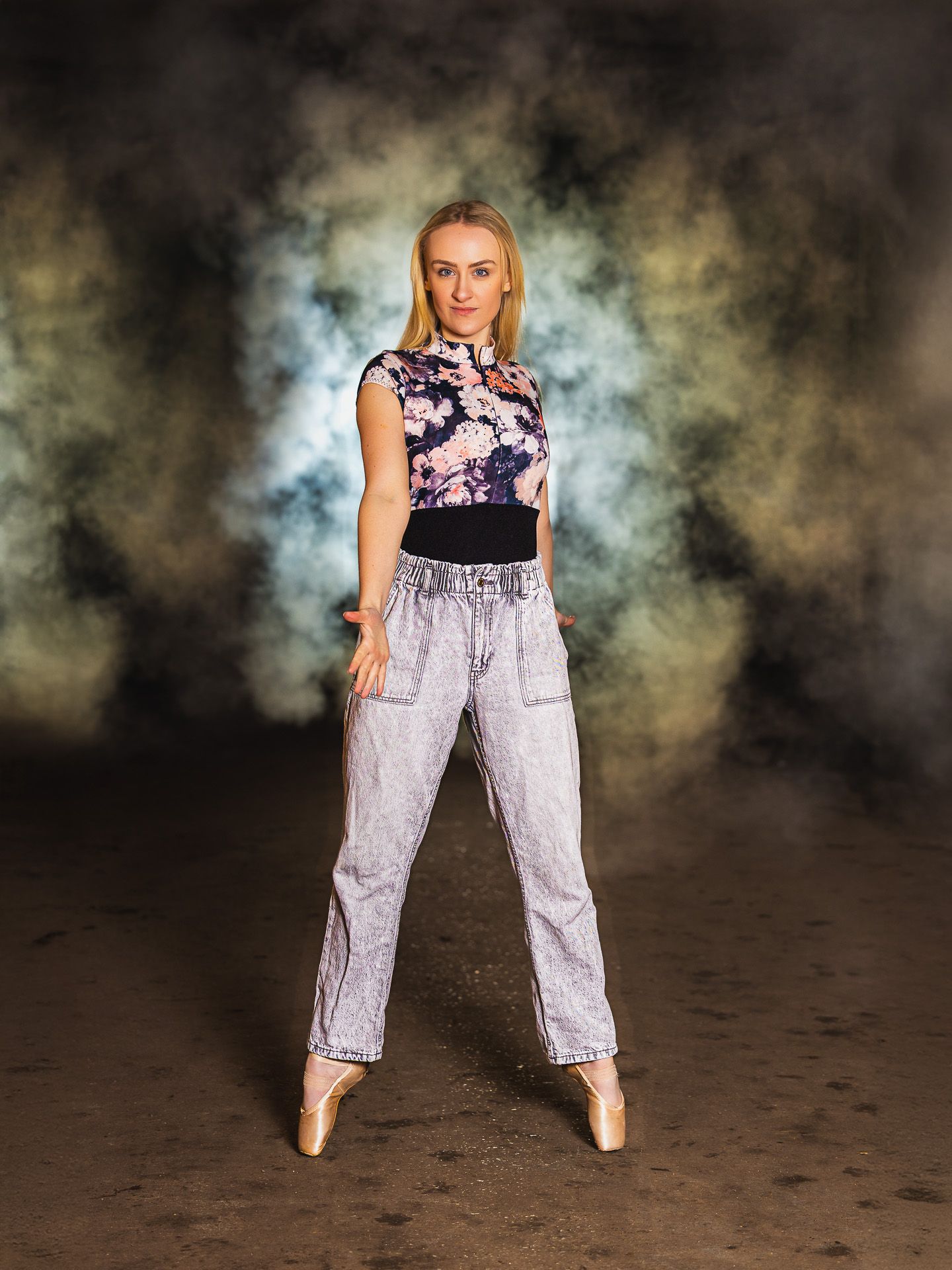
Left to right...
Ava: This massive old garage door in Hull with beautifully peeling paint is a textbook example of how raw texture can elevate a dance portrait.
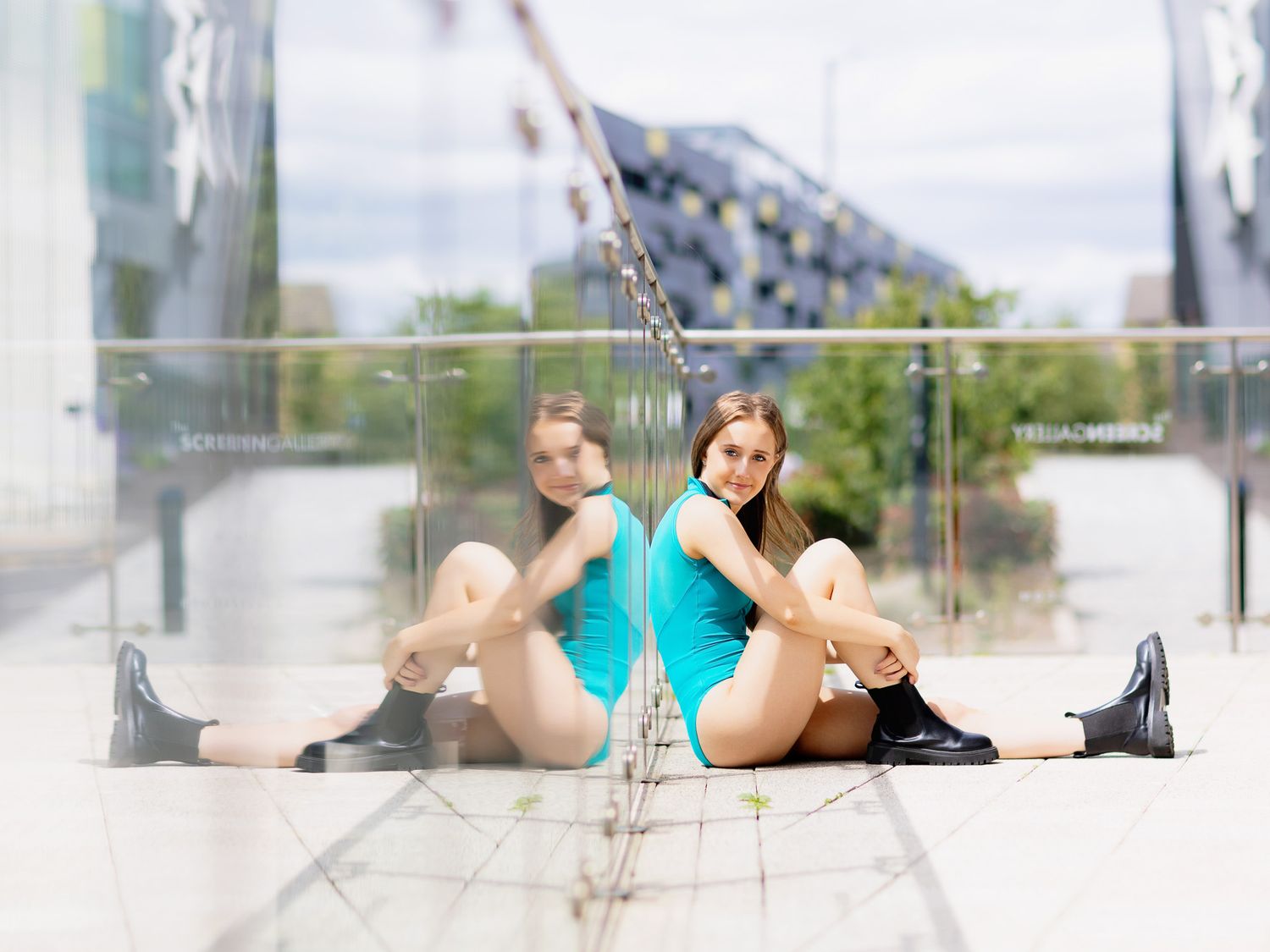
Bertie: A quirky, creative shot using an old mirror we found inside this empty shop unit, which perfectly contrasted against the rough, industrial brick wall behind it.
Lily: The brutalist, weather-beaten concrete wall of an underpass provided a brilliantly gritty, minimalist backdrop for this striking portrait.
Tamzyn: Texture doesn't always have to be solid; a smoky haze created with atmosphere spray brought a completely different, ethereal kind of texture to the air for this photo.
Why Absolutely Anywhere Can Work
At the end of the day, these archives prove one thing: as a dance photographer, you don’t need a postcard-perfect backdrop to create a breathtaking image. In fact, sometimes a flawless location can actually make a photo feel a bit sterile. When you shift your perspective and look past the initial "ugliness" of a spot, you open up a world of endless creative possibilities. It’s all about seeing the potential in the ordinary - looking at a rusty pipe, a patch of weeds, or a stained concrete floor and seeing shapes, lines, and contrast instead. If you have a talented dancer, a great understanding of light, and an open mind, literally anywhere can become your stage.
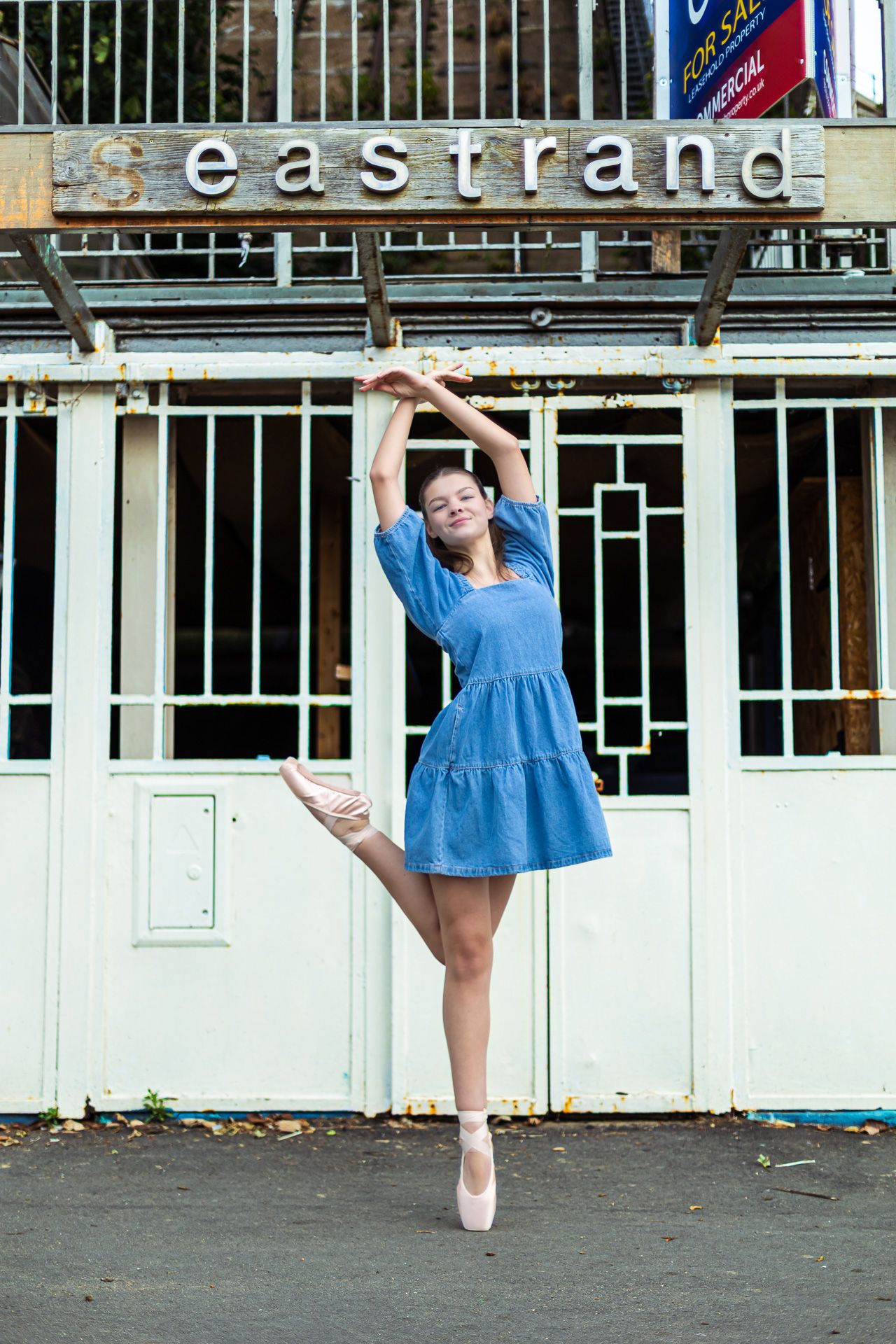
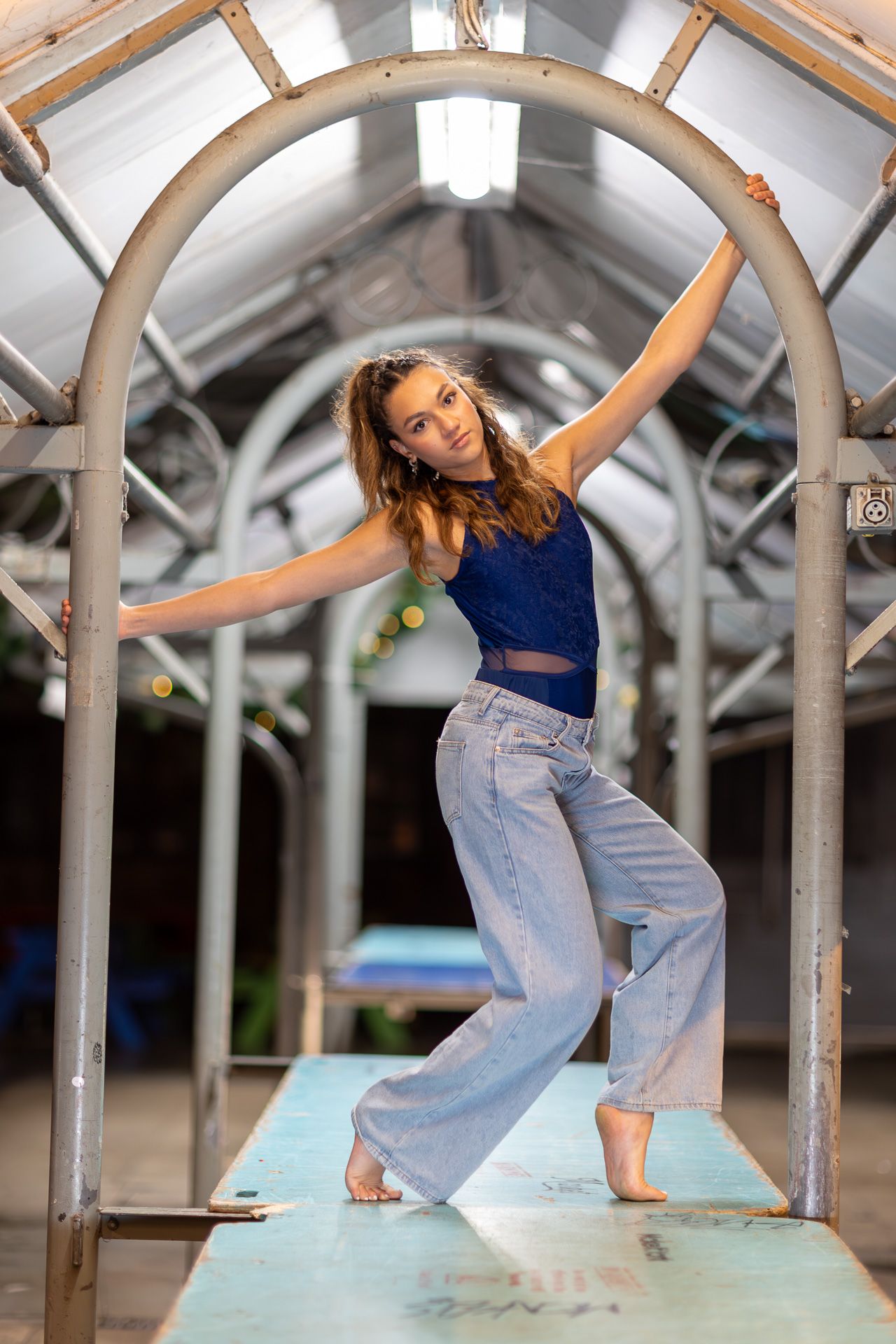
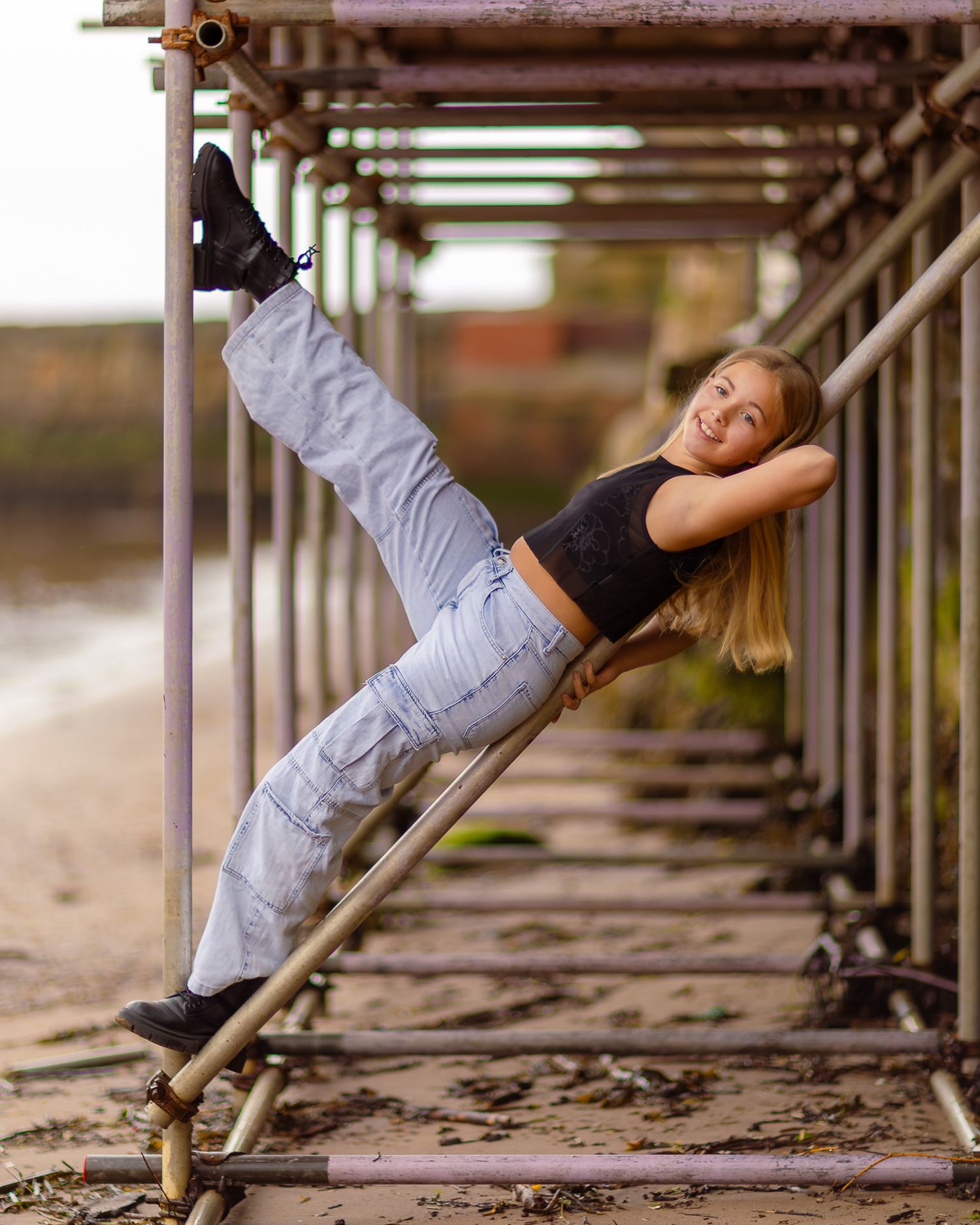
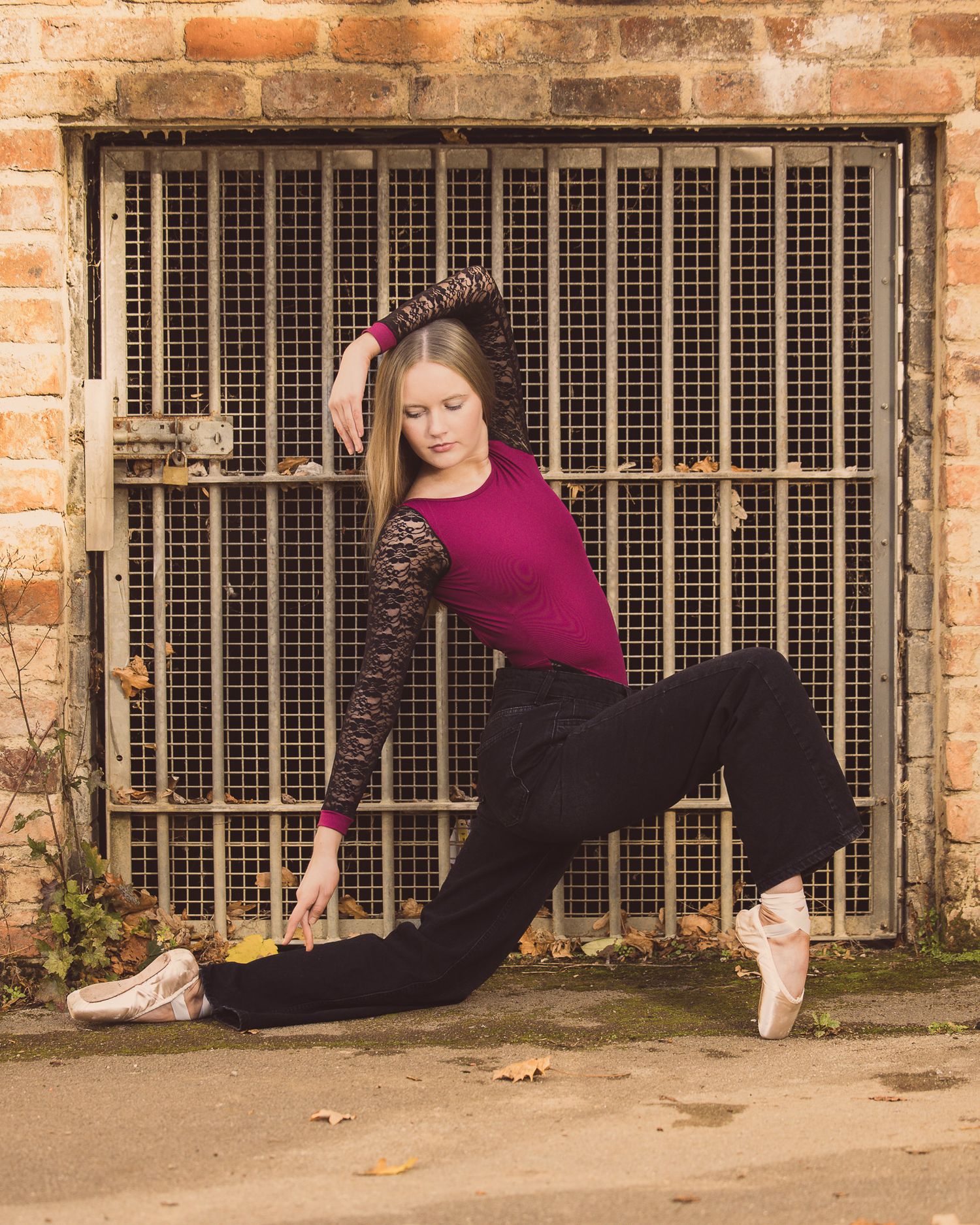
Below are four final photos from the archives that don't fit neatly into any of the categories above, but perfectly prove the point that magic can be found in the most unexpected places...
Left to right...
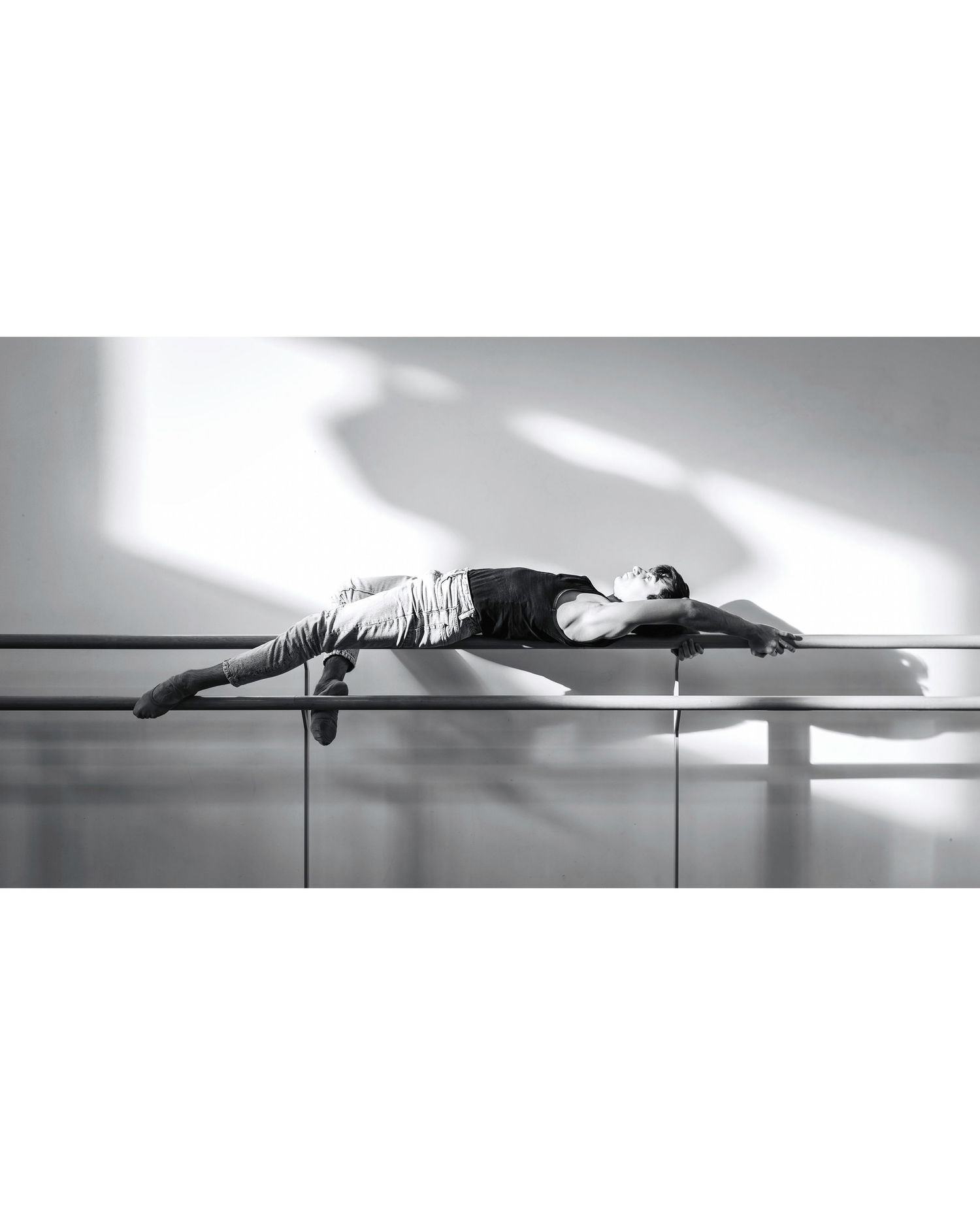
Eloise: The bottom of the old, disused cliff lift in Scarborough creates a fantastic, industrial aesthetic in this Denim en Pointe photo.
Maria: The empty market stall benches at the Shambles Market in York are always incredibly fun to use for playing with different heights and framing.
Lyra: Some random construction scaffolding we stumbled across while wandering around the streets of Whitby provided a brilliant, metallic framework.
Ella: A delightfully grimy metal gate of some sort right on the riverbank in York, which gave us the perfect gritty backdrop.